








Sekoia Elevate - Agentic AI SOC Analyst
Every alert investigated. Every decision explained.
Elevate AI agents work alongside your SOC team, acting as AI analysts. They investigate every alert, correlate the evidence, enrich it with threat intelligence and produce an audit-ready report that shows their full reasoning.
Get a demo


Unified Security Operations Platform
An agentic SOC analyst that stays ahead
Investigate every alert, not just the loudest ones
Elevate runs an alert investigation on every alert, with the same rigor for low-priority alerts that turn out to be real threats. High priority threats surface faster, and false positives are closed with the evidence to back them up.
Scale your SOC without scaling your team
Alert volume keeps rising while your team stays the same size. Elevate takes on the repetitive tasks of automated alert triage and investigation, so security analysts can focus on decisions and incident response.
Autonomous SOC analysts you can audit
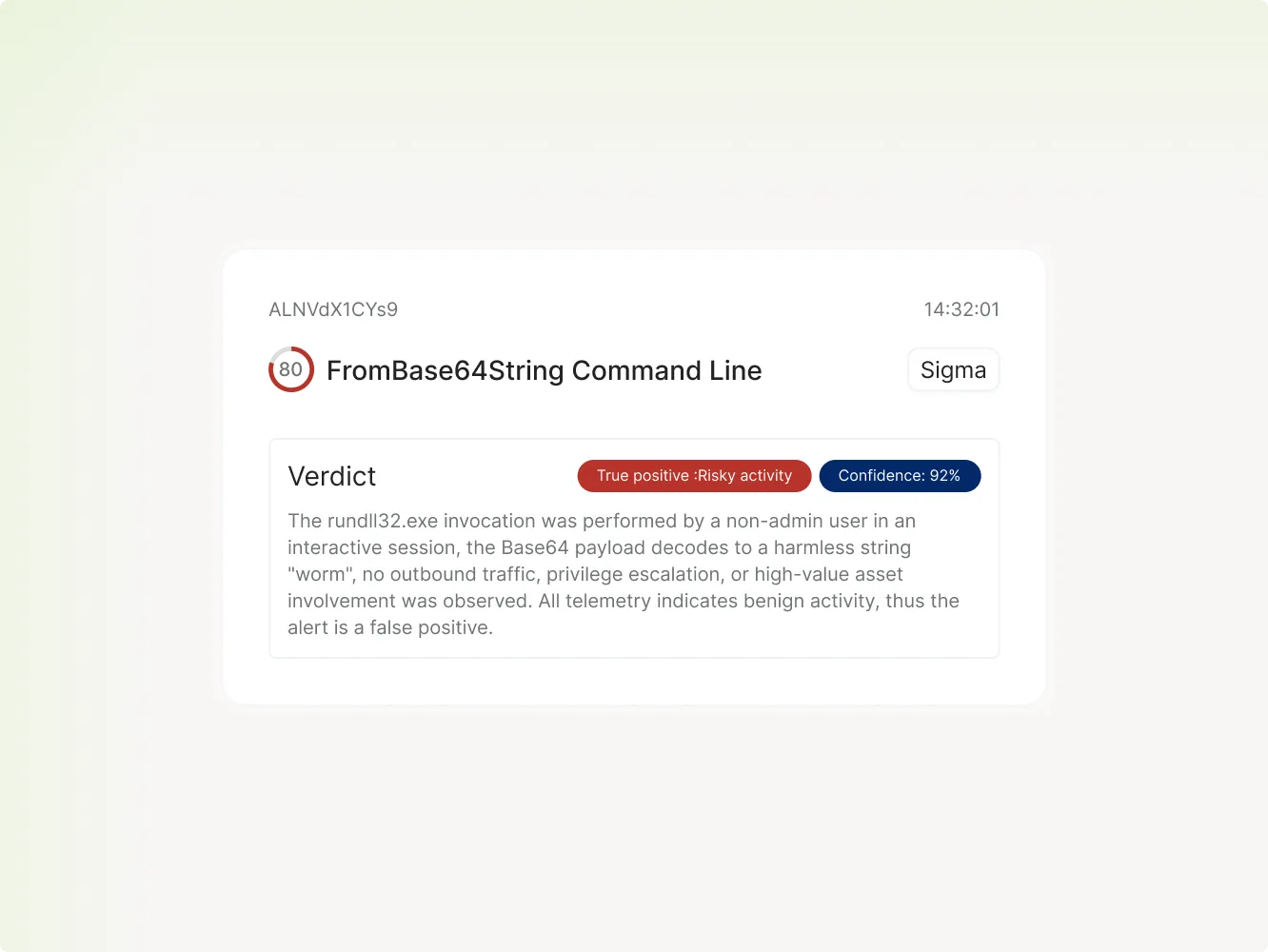
Every verdict arrives with its evidence and its reasoning: the questions the agent asked, the searches it ran and what it found. Analysts review a reasoning chain they can check, with human oversight on every decision.
Your data stays yours, by design
All Elevate AI systems run on Sekoia's infrastructure, and customer data stays there. Elevate is designed for organizations that prioritize data residency and autonomy.
Get a demo
rob gupta, founder & ceo, connectprotect
Security leaders choose Sekoia's autonomous SOC agents to strengthen their defenses against emerging threats.
Partners rely on Sekoia to deploy faster, scale globally, and deliver protection their teams trust.
Autonomous investigation. Human validation.
Runbook-driven investigations
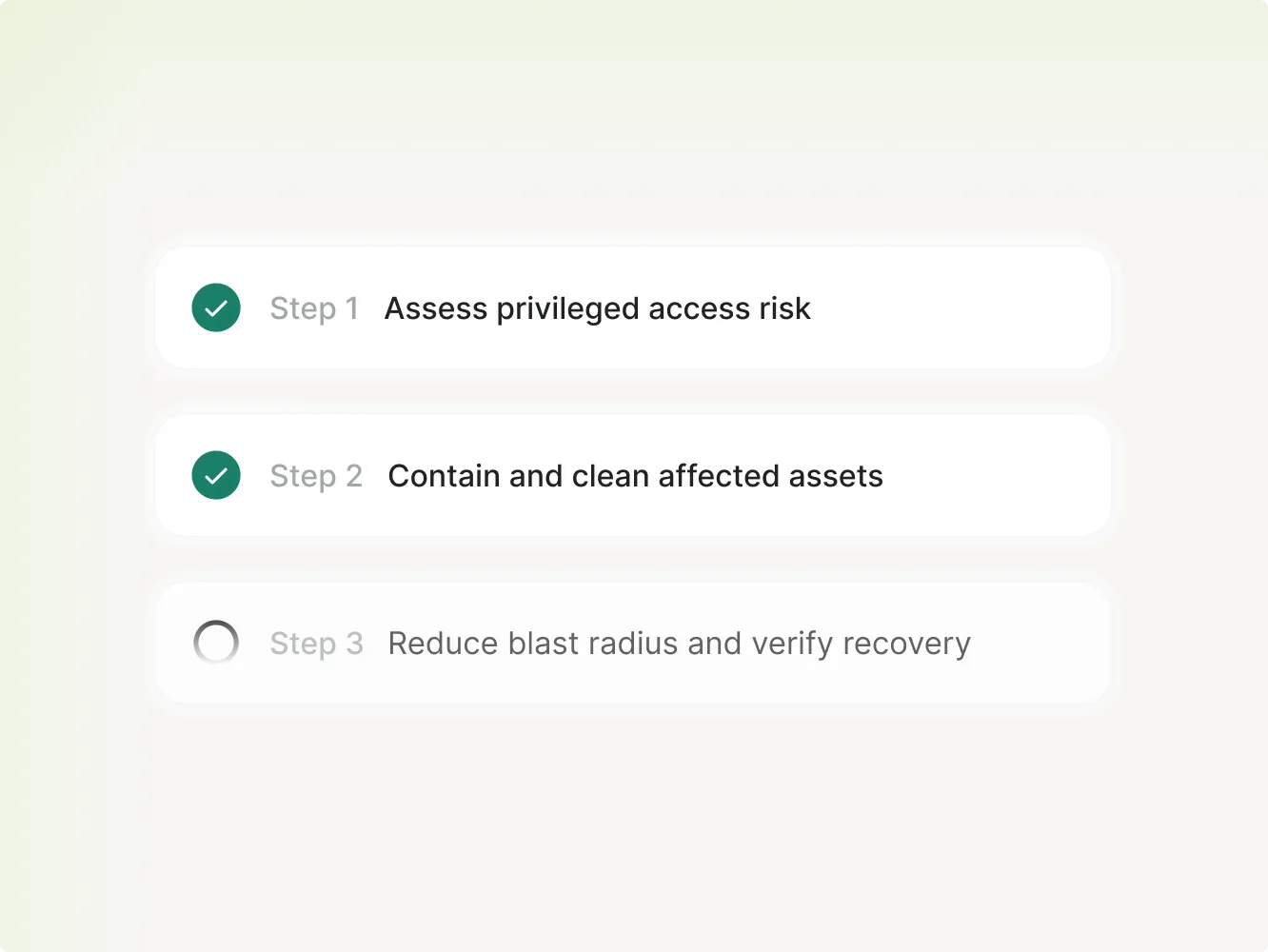
Expert runbooks guide how alerts and cases are analyzed, building proven investigation logic into every workflow. For each alert, an AI SOC agent builds an investigation plan from the runbook. It correlates logs, asset context and intelligence into a structured investigation narrative.

Transparent verdicts and documentation
Every agentic AI investigation produces a clear, explainable outcome, ready for analyst review with its supporting evidence and reasoning path. Documentation is written automatically into case management, covering the steps taken and the conclusions reached for handover, audits and reporting.

Analyst control at every step
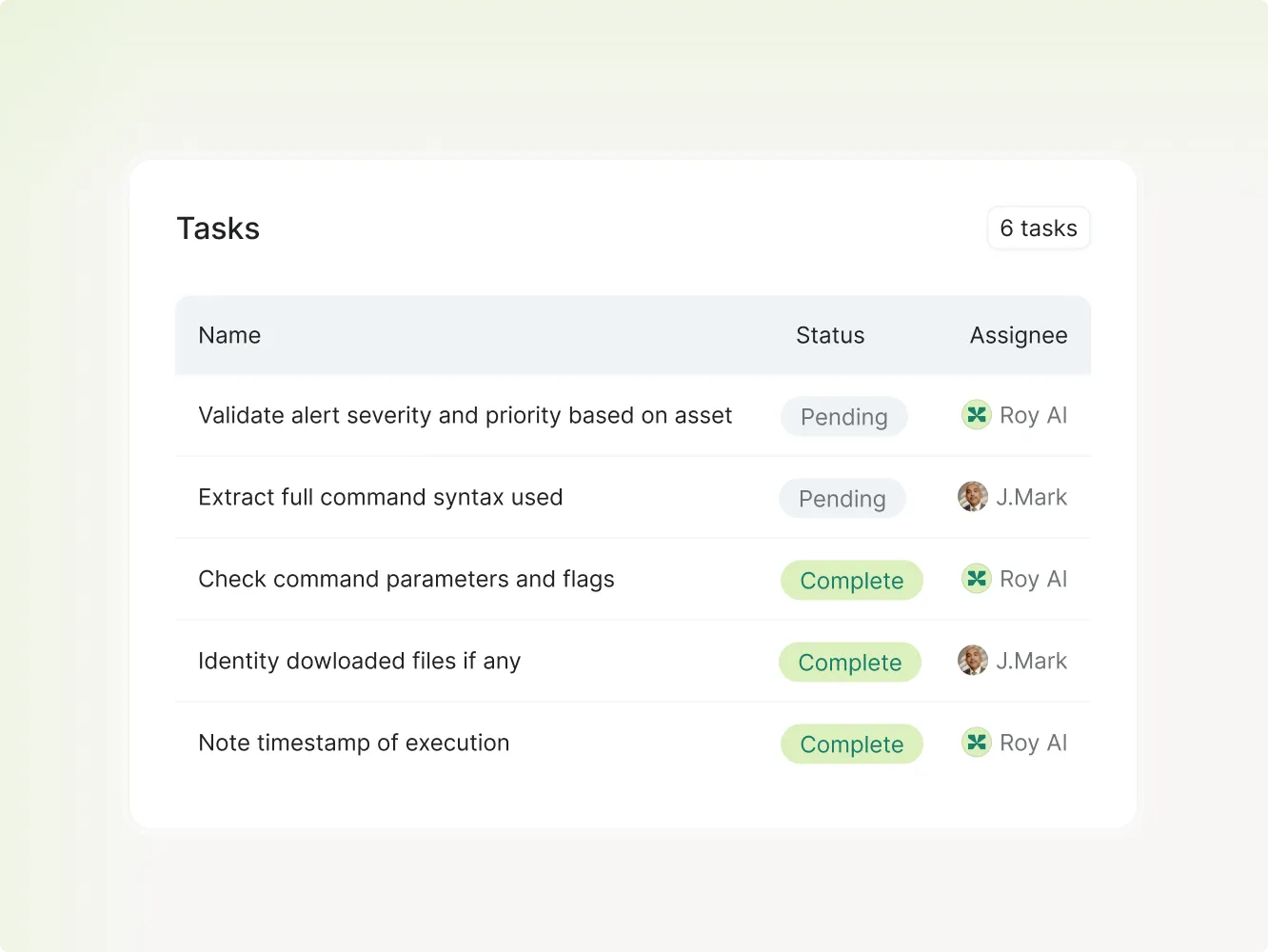
Elevate keeps human analysts in control throughout the investigation. Teams review outcomes, validate findings, correct errors and refine workflows, so every human review feeds process improvement. Human judgment goes where your risk tolerance calls for human intervention.

Context-aware agents for every environment
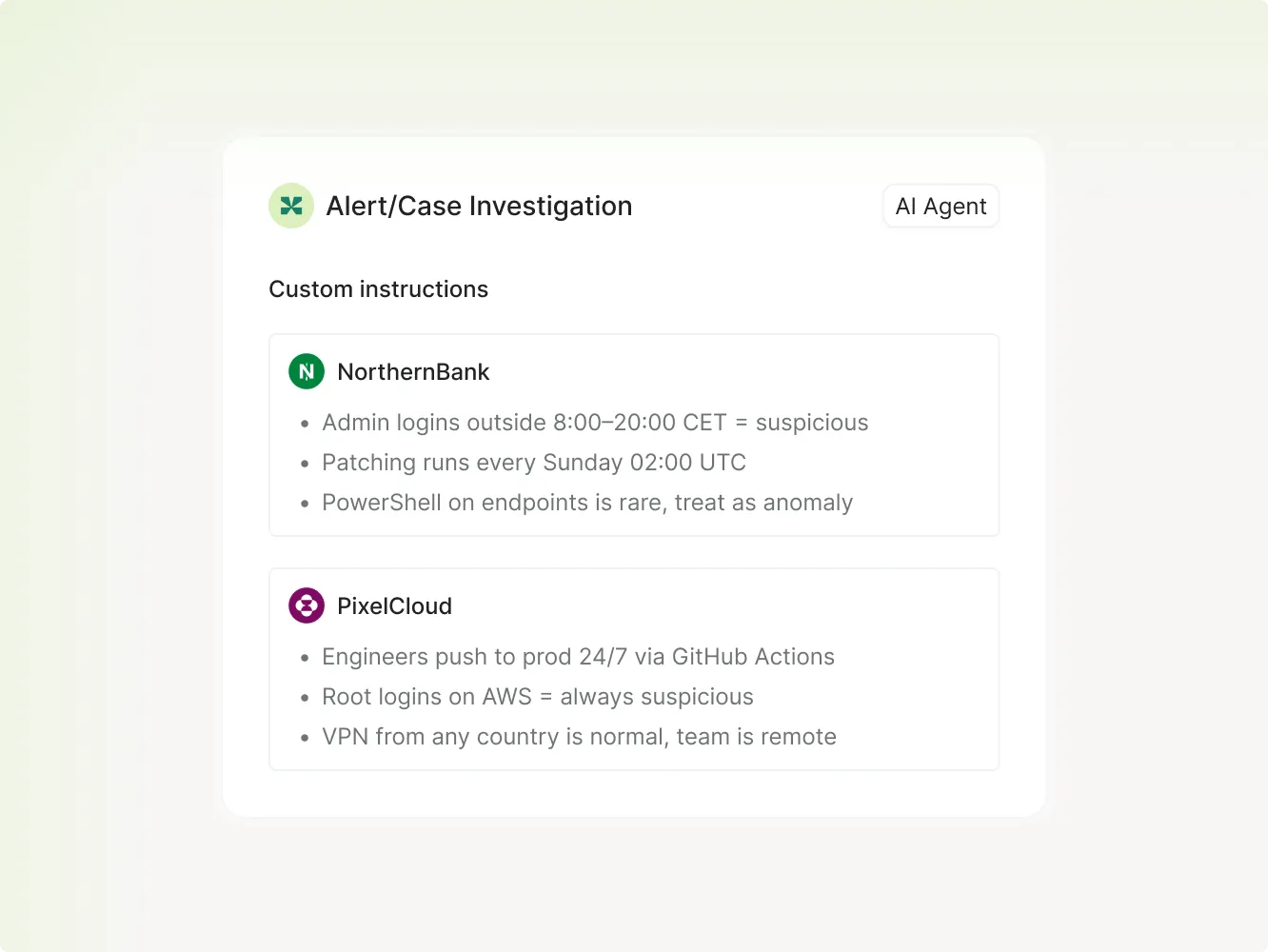
Agents can be adapted with organization-specific context and memory, including asset criticality, so each investigation reflects its environment. In multi-tenant settings, service providers can tailor agent behavior and investigation logic for each customer, within defined boundaries.

Key figures
Take a tour of Elevate in the Sekoia autonomous SOC platform
“Sekoia's intuitive interface and advanced analytics capabilities have significantly enhanced our alert triage process. It also has a simple and quick integration with our existing security stack.”
Security leaders of all sizes choose Sekoia to improve their security posture.
Partners rely on Sekoia to deploy faster, scale globally, and deliver protection their teams trust.
See our partner stories
Questions about agentic AI and AI SOC analysts
What is Sekoia Elevate?
Sekoia Elevate is the agent layer of the Sekoia autonomous SOC platform. Its specialized agents work as AI SOC analysts: they investigate alerts, correlate evidence across security data and give analysts structured findings. SOC teams spend less time on manual investigation and respond faster, with analysts keeping full control of decisions.
How does Elevate help SOC analysts?
Elevate automates the most time-consuming security operations tasks involved in investigating alerts. Its agents gather evidence across telemetry sources, correlate signals and enrich findings with threat intelligence feeds. The time analysts spend shifts to response and strategic analysis, which means reduced manual effort and less alert fatigue.
How does Elevate work with the Sekoia autonomous SOC platform?
Elevate runs on top of the platform's threat detection, telemetry and threat intelligence. It analyzes the alerts raised by detection rules and machine learning models, then launches investigations across your full security stack.
Is Elevate designed for MSSPs/MDRs?
Yes. Like the entire Sekoia SOC Platform, Elevate is suited perfectly to MSSPs and MDRs. From multi-tenant architecture to features designed to manage multiple clients, Elevate is the perfect fit for both small and large MSSPs and MDRs.
Is Elevate suitable for regulated environments?
Yes. Elevate is designed to support organizations operating in regulated sectors. Investigations remain transparent and auditable, allowing security teams to maintain control over decisions while benefiting from automation.
How does Elevate improve investigation speed?
Elevate agents collect logs, correlate events and analyze context, freeing analysts from these time-consuming manual tasks. Organizing the evidence into an investigation narrative shortens the time it takes to validate a threat. Between 1 September and 9 October 2026, investigations averaged 99 seconds across more than 500,000 production investigations.
Can I retrieve Elevate agents verdict and findings by API to centralize them into our SOAR?
Yes. All data produced by Elevate is available through the Sekoia agentic cybersecurity platform, so you can bring it into your SOAR and the rest of your security stack.
Does Elevate replace security analysts?
Elevate helps analysts make faster, better-informed decisions. The platform provides transparent and explainable investigations, so analysts can review findings and make the final decisions. Automation accelerates the investigation process while keeping human expertise at the center of security operations.
What is the difference between LLM and agentic AI?
Both are forms of artificial intelligence. In a security platform, an LLM is the language model itself. It uses natural language processing to read alerts, summarize incidents and answer analyst questions, mostly in response to a single prompt.
Agentic AI describes AI-driven systems built around the LLM that take actions and manage workflows. These systems decide what to investigate next, query logs or threat intelligence, correlate findings and trigger response actions under policy guardrails. An LLM generates responses and interprets information, while agentic AI adds planning, tool use and execution.