
Let’s be honest about where most SOC teams are right now. They have plenty of automation… but definitely not enough investigation. I heard many times of SOC teams investigating only high severity alerts. There are just too many low severity alerts. Low severity does not mean low risk. An analysis of more than 25 million security alerts found that 1.9% of low-severity and informational endpoint alerts were actually real security incidents. Not surprisingly, an MSSP told us that most incidents are traced to low severity alerts that they had no time to investigate.
Threat actors have to either fly under the (high severity) radar to avoid attracting attention, or fly fast to hit their target before your SOC team has time to react. They count on analysts being too buried in triage to catch what actually matters.
An AI SOC closes that gap.
But it requires a lot of data, both about what is happening in your environment and about the latest attacks (CTI). The clarity of data is critical. If you have ever been confused by looking at an unclear data set, think about how it looks for an AI agent. So to produce reliable results an AI SOC requires high quality integrations providing reliable evidence as well as intelligence about attackers (detection rules and IOCs) .
This article looks at six integrations that actually add useful context to an AI SOC, from identity protection and cloud runtime activity to vulnerability exposure and incident response.
What is an AI SOC?
Let’s start with what most SOCs already have. SOAR platforms run scripted playbooks when conditions match. SIEMs pull data together and surface correlation rules. These are solid, widely deployed tools. But they're built around one logic: when X happens, do Y.
An AI SOC platform (or integrated SOC in Gartner terminology) is built around a different reality. When something happens, you need to truly understand it. AI agents actually investigate what’s really happening. They will:
- Gather context from across the environment.
- Look for behavioral patterns.
- Pull in relevant threat intelligence.
- Produce structured findings that analysts can review, challenge and act on.
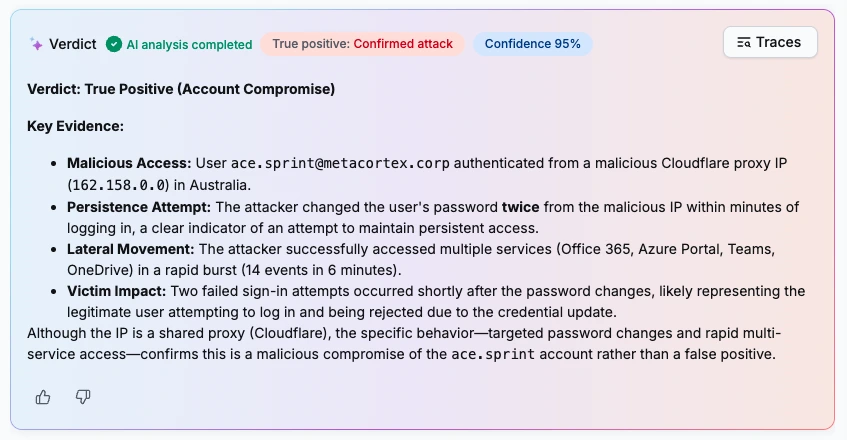
The most complete version of this is agentic cybersecurity operations.
Sekoia builds a trusted SOC on three pillars.
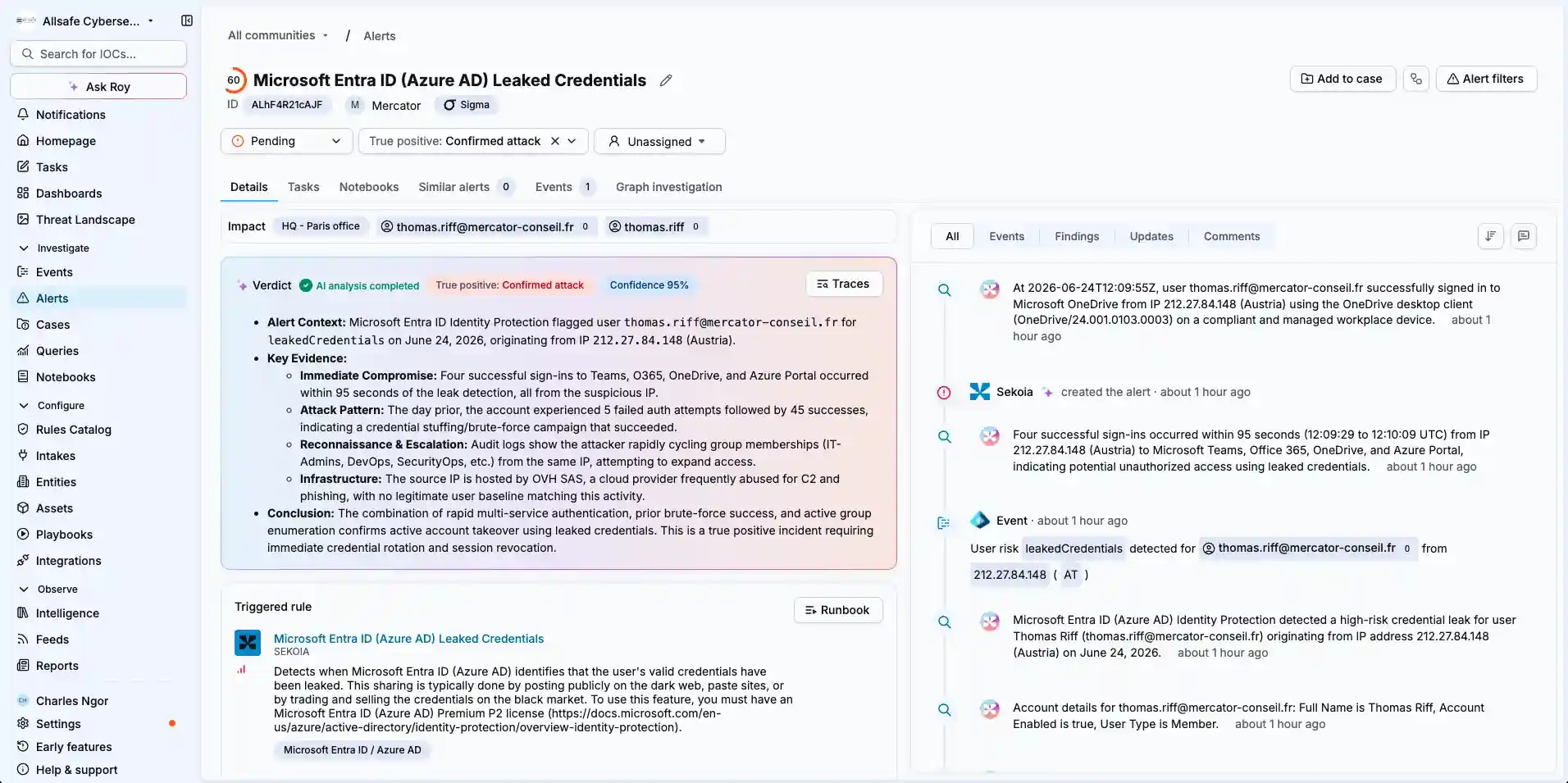
- First, investigation logic drawn directly from Sekoia's own detection and threat intelligence research. Every detection features an investigation runbook that provides clear logic, false-positive scenarios, and structured questions. The agent investigation is guided, its logic visible and editable.
- Second, private infrastructure. All AI computation runs on Sekoia-hosted servers, with no data sent to external providers. The analysis happens where the data is supposed to be. For regulated industries and MSSPs managing multiple customer environments, sending sensitive client data to external AI providers creates commercial and compliance exposure they can't afford.
- Third, human oversight by design. Analysts keep oversight and the final say. Every finding is reviewable, every verdict is overridable and every automated decision is fully traceable. So analysts do not rubberstamp a black-box decision.
This distinction really matters. Automation moves tasks forward, but agentic operations move entire investigations forward. And that shapes how we should be thinking about integrations, too.
What makes an AI SOC integration worth adding?
Not every tool that can be connected to an AI SOC should be. Otherwise, you’re just creating more noise. The genuinely useful ones share a few qualities.
A good AI SOC integration should…
- Add something truly different, not the same capability with a new interface.
- Improve the speed and quality of investigations by giving analysts more specific, contextual evidence from parts of the attack surface that weren't previously visible.
- Deliver directly actionable output; something an analyst can understand immediately, not something ambiguous.
- Be explainable and fully auditable, especially in regulated industries where every investigation needs to be reconstructable. Integrations that contribute evidence without traceability just move the accountability problem somewhere else.
The six examples below will illustrate what this looks like in practice.
Open by design: An AI SOC that works with your existing stack
A common concern when organizations start looking at AI SOC platforms is that they'll end up replacing everything they've already built. Think a new platform, new interfaces, more migration, existing investments made redundant.
Sekoia works the other way. With more than 320 well-maintained integrations, it connects to the tools organizations already rely on: endpoint and identity platforms, threat intelligence sources, cloud environments, incident management systems. Sekoia is also designed to easily add custom integrations as needed.
So analysts and AI agents get a single operational view without losing the context.
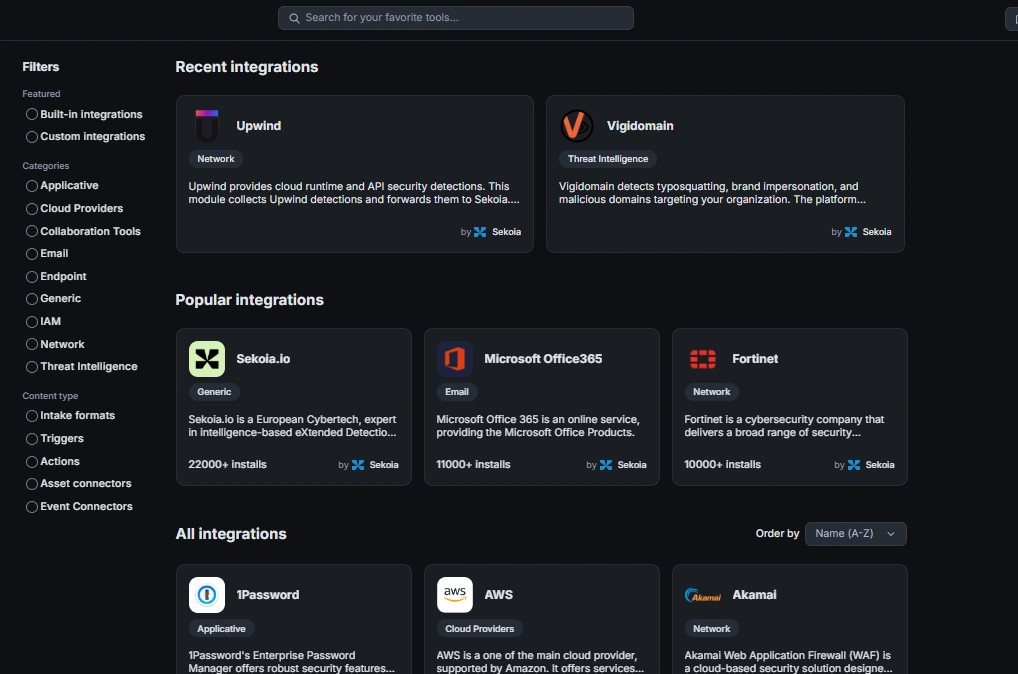
6 AI SOC integration use cases
The six recent integrations below aren't “add-ons”, so much as extensions of the same operating environment. Each one brings a different kind of context or capacity into one picture. And because the Sekoia agentic cybersecurity platform is open, organizations can build out the right combination without being locked into any particular path.
1. Identity and Access Management: Silverfort
Silverfort is a fast-growing unicorn disrupting the IAM market. Identity-based attacks are becoming increasingly difficult to detect. Compromised credentials look legitimate, while legacy systems and hybrid environments often lack compatibility with state of the art authentication.
That's exactly why the integration between Silverfort and Sekoia is so valuable:
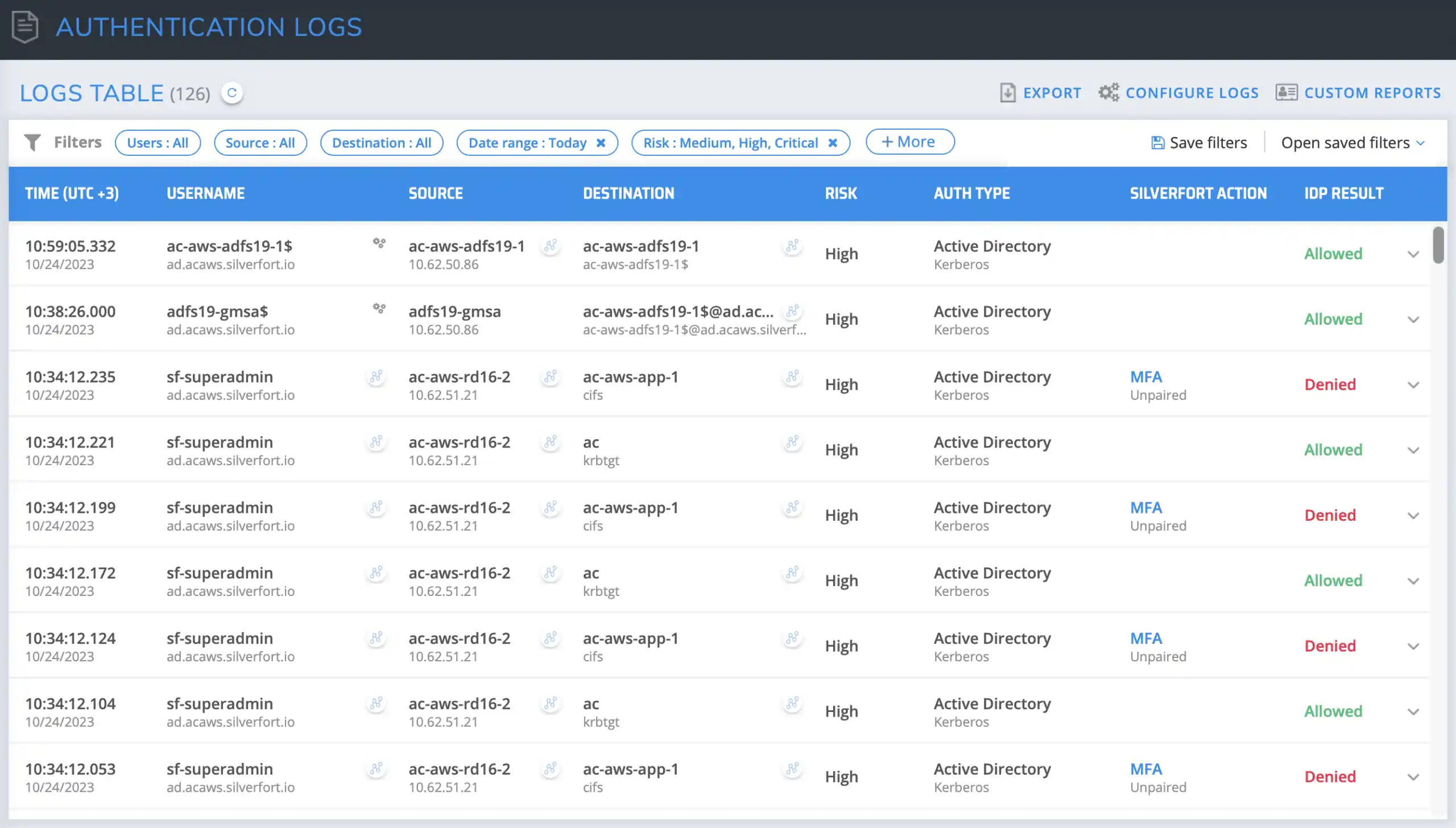
- Silverfort provides unified, agentless identity protection across on-premises, cloud, hybrid, and legacy environments. Its telemetry brings valuable context around authentication risk, MFA decisions, policy actions, and suspicious access patterns.
- With the Sekoia integration, this identity context can be correlated with threat intelligence and security events across the organization. Analysts and AI agents can investigate identity-related threats with accurate information and react to credential abuse faster.
2. Vulnerability and exposure management: Holm Security
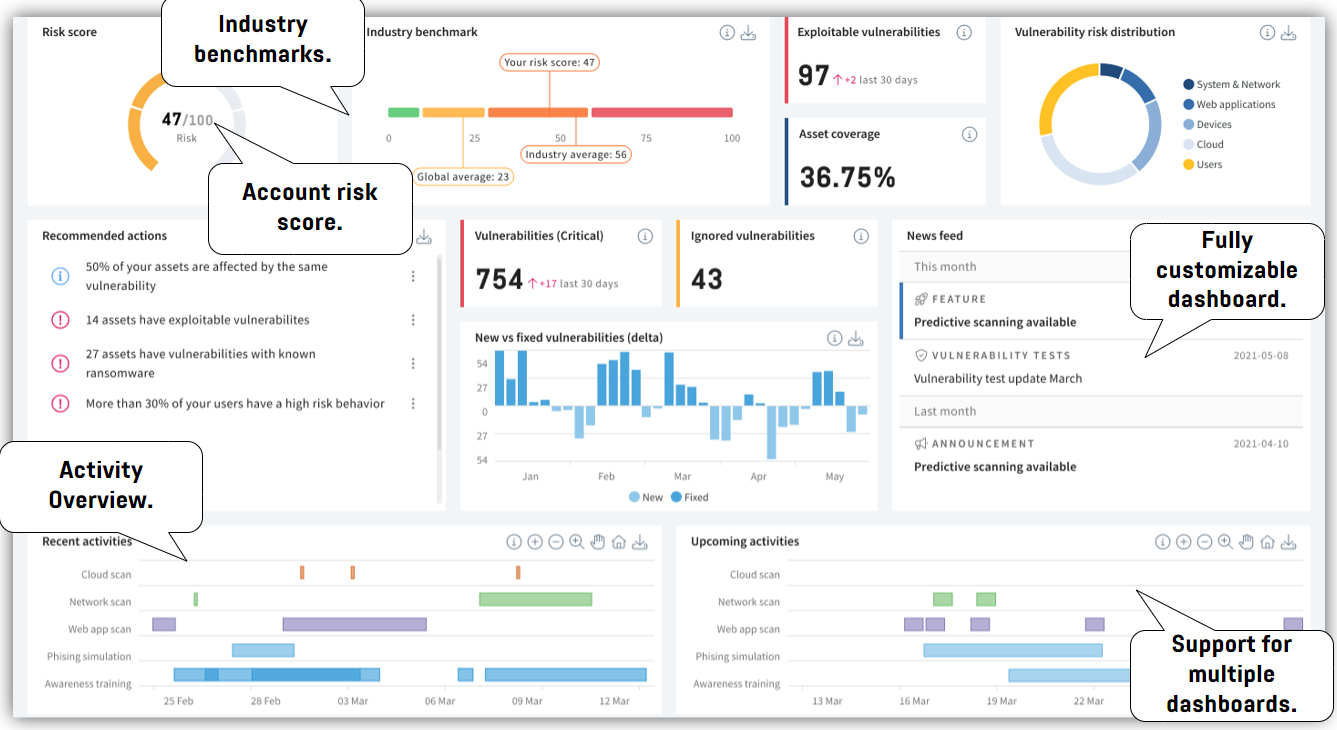
Holm Security is a Swedish scale-up providing an all-in-one solution to manage and remediate vulnerabilities across networks, clouds, web applications, APIs, and human assets. Threat actors are leveraging AI to discover and abuse vulnerabilities faster than ever.
Holm Security has been using AI for years to discover, triage and test vulnerabilities, providing an overall view of the risk your IT and OT organizations are facing.
By importing its telemetry, Sekoia acquires a complete view of the assets to defend and their associated risks. This provides essential context for an analyst or an AI agent analysing an alert.
3. Active identity recovery: Mokn
Mokn is a French cybersecurity startup, backed by GV, that introduced a new approach to identity threat detection: Instead of only monitoring for compromised credentials once they appear in leak databases, MokN deploys ultra-realistic authentication portals designed to lure attackers into testing stolen credentials.
This allows security teams to intercept stolen credentials before attackers use them in an attack or before they eventually end up on the dark web. Each credential is validated against the identity provider, removing the risk of false positives and giving security teams a reliable signal they can act on.
This approach also turns real attacker activity into unique, organization-specific threat intelligence. It helps reveal which threat actors are targeting the organization, how frequently, and which users are specifically being targeted.
Once ingested into the Sekoia SOC platform, this intelligence will allow to block persistent attackers who may eventually find another path into the network to deliver spyware or ransomware. Analysts and AI agents can then reconstruct the bigger picture behind the attack.
4. Alert and incident management: ilert
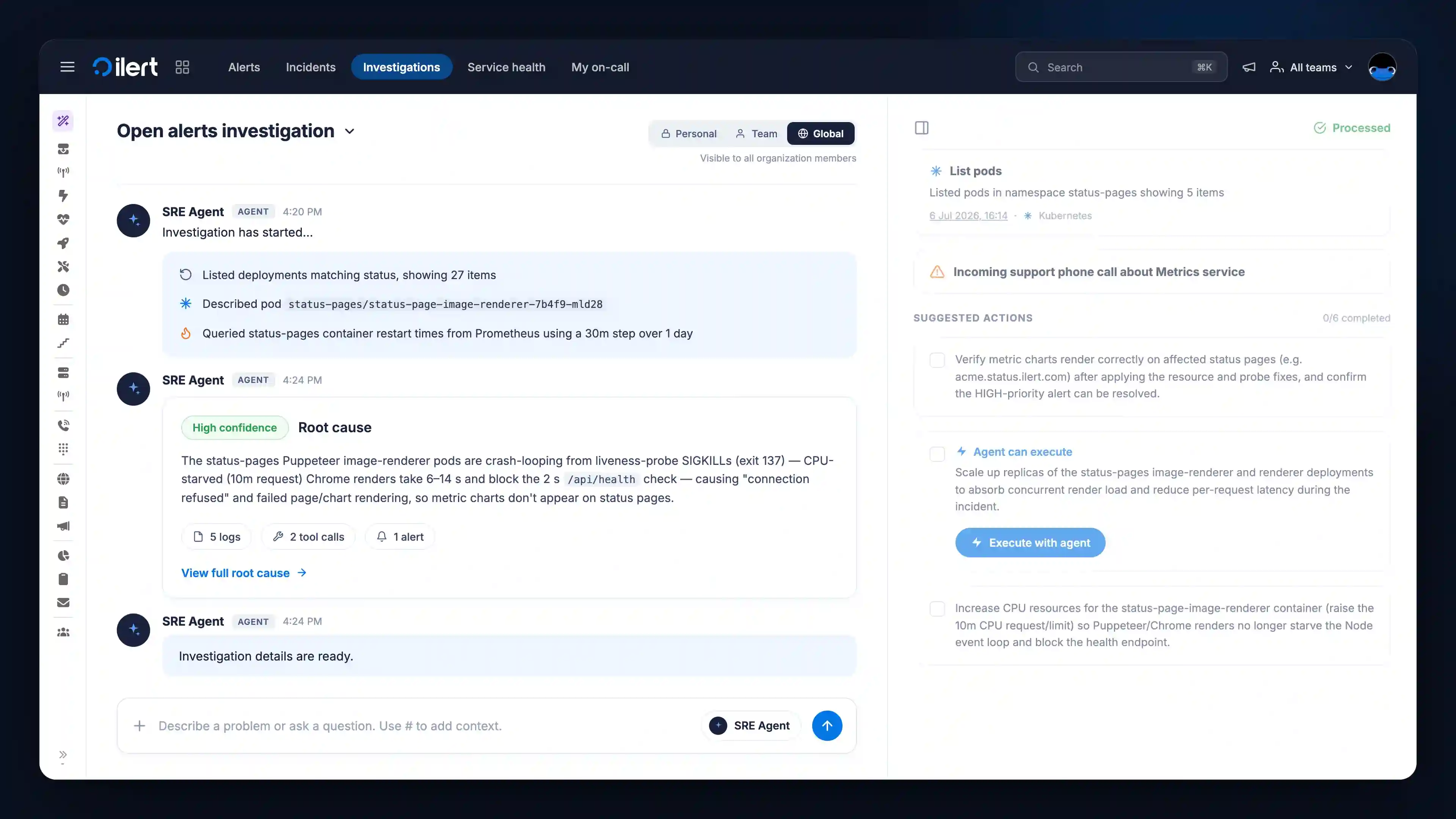
ilert is an alerting, on-call, incident management, and AI SRE platform, built and hosted in Germany. An investigation that produces accurate, well-documented findings and then sits in a queue isn't an operational win. It just moves the bottleneck.The handoff from investigation to response is where SOC time disappears. Three questions decide how long it takes:
Who needs to know?
How urgently?
With what context?
ilert answers all three. When a Sekoia investigation confirms a detection, ilert checks who is on call, notifies them on channels that actually wake people: push, SMS, and voice calls, plus Slack, Teams and Google Chat, and escalates automatically if nobody acknowledges. The context travels with the alert, so the responder acts immediately instead of reconstructing what happened.
And because ilert is built and hosted in Germany, incident data stays in the EU. Faster investigations only produce faster outcomes when the response side keeps pace. That's the gap ilert closes.
5. Cloud security: Upwind
Upwind is a fast-growing unicorn redefining cloud security with a runtime-first approach.
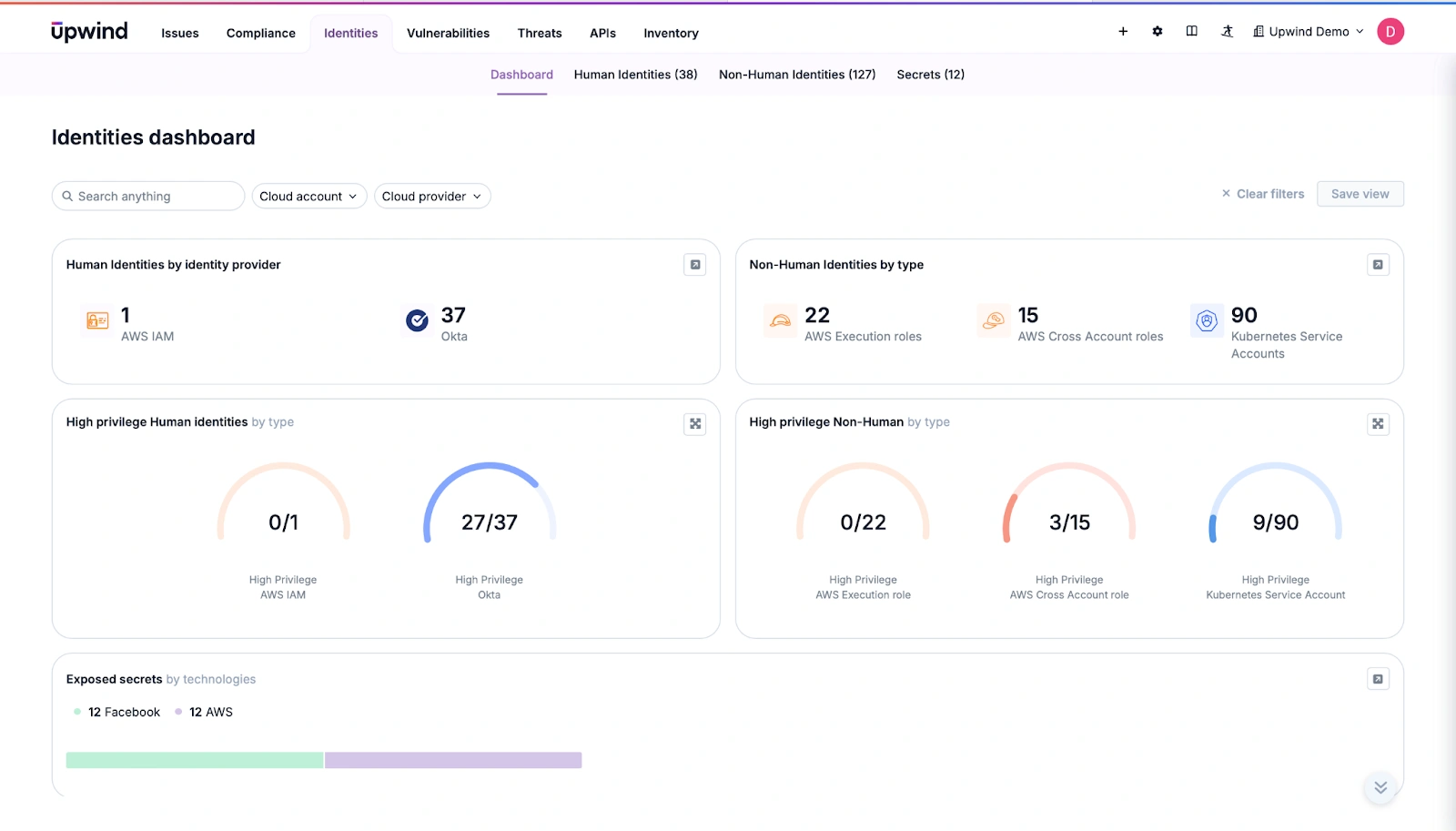
While many cloud security solutions focus on vulnerability and mis-configuration, Upwind goes a step further and analyses what is really happening at runtime. Runtime inteligence allows therefore to detect if a workload, an agent or a cloud asset is behaving suspiciously right now. For example, it might have accessed a sensitive resource, from this process, using this identity, breaking with its normal behavior.
By importing these runtime findings and alerts, Sekoia acquires a real-time view of on-going attacks in the cloud. correlates it with other security events and enriches it with context and intelligence. Analysts or AI agents can then run an investigation with complete visibility.
6. Microsegmentation: Akamai Guardicore
Akamai is a global technology leader with a comprehensive portfolio of cybersecurity solutions.
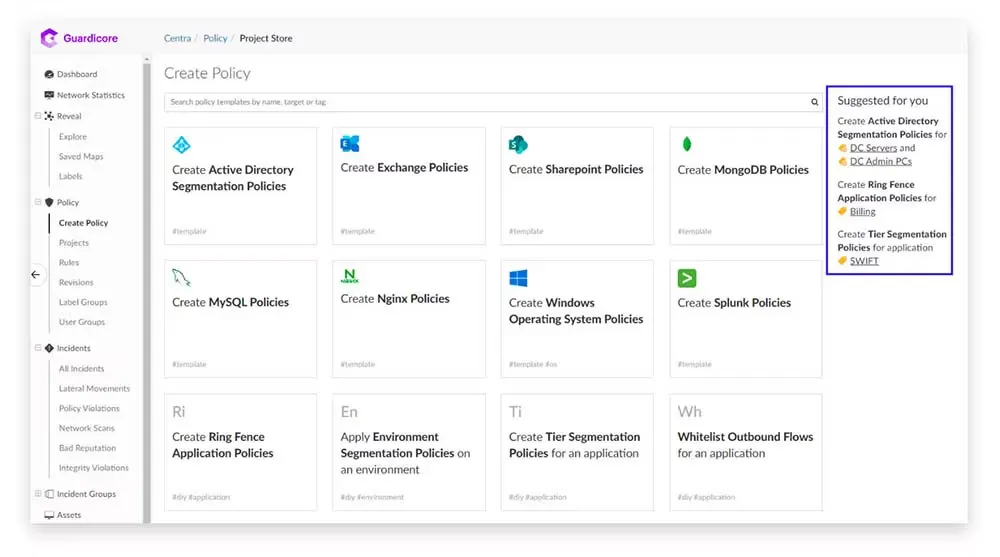
Akamai Guardicore is a leading Zero Trust and microsegmentation platform that helps organizations prevent attackers from moving laterally across their environments.
While many security solutions focus on detecting threats, Akamai Guardicore goes a step further by controlling communication between workloads, applications, and users. It provides granular visibility into network traffic and enables organizations to enforce policies that limit which systems can communicate with each other, helping contain compromised assets and prevent lateral movement.
By integrating these events with Sekoia, security teams gain a real-time view of network activity and potential attack paths. Sekoia can correlate Guardicore events with other security signals and enrich them with additional context and intelligence. Analysts or AI agents can then investigate suspicious activity with a complete view of the attack and its potential impact.
The platform that holds it all together
Six integrations, one picture. But that only works when the platform in the middle is built to hold them.
Sekoia is an agentic cybersecurity platform designed to do exactly that.
- The investigation logic is built on Sekoia's own detection and threat intelligence research, embedded at the detection level rather than bolted on as generic playbooks afterward.
- All AI computation runs on private, Sekoia-hosted infrastructure, so sensitive security data never leaves for external providers (which matters a lot in regulated environments).
- And analysts keep full oversight throughout, with every verdict reviewable, overridable and traceable. We call it “human-on-the-loop”, because it reflects the true control that Sekoia offers.
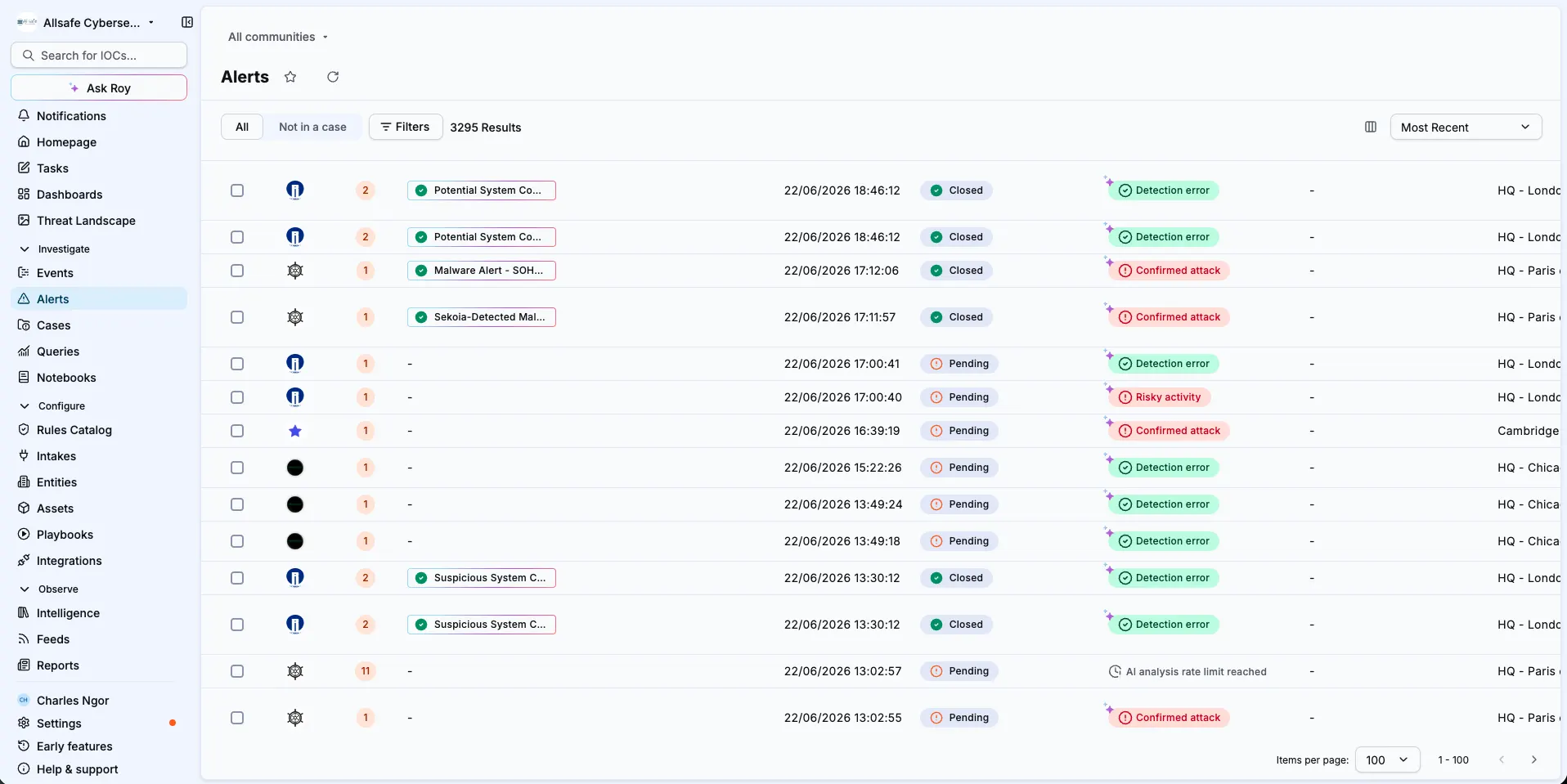
On top of that, more than 320 out-of-the-box integrations mean the capabilities covered in this article connect to Sekoia without displacing what already works in your stack. You get agentic investigations at machine speed, on infrastructure you control, with analysts who stay in the loop on every decision.
That's the combination worth building around.
Book a demo to discover Sekoia's agentic cybersecurity platform (and 320+ integrations to go with it).