

AI agents are moving into security operations centers faster than most teams can define what “production-ready” means.
Because of this, Gartner predicts that 40% of agentic AI projects will be canceled by 2027. That gap matters. A demo can show that an agent reaches a verdict. A production SOC needs to show how it reached that verdict, what data it used, and whether an analyst can trust the result when the pressure is on.
Before rolling out AI agents, security teams need clear answers to five questions.
Where does the AI run?
The first question is always about data sovereignty.
Many AI applications send data to external models operated by companies such as OpenAI or Anthropic. That may be acceptable for some use cases. It can create a serious concern for others, particularly when the data includes security logs, identity events, endpoint activity, network traffic, or details about an active intrusion.
Security teams should know exactly where their data goes, which providers can access it, and how long it is retained. They also need to understand how that setup fits with the regulatory requirements of their industry and region.
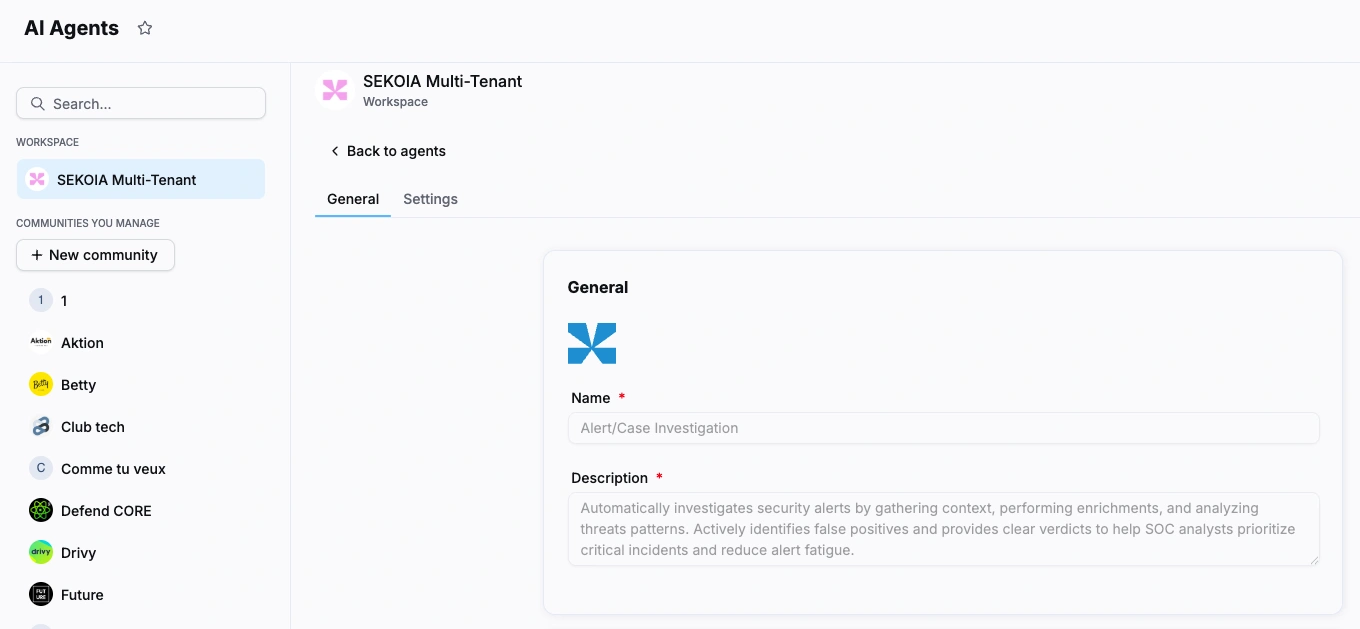
In Sekoia autonomous SOC, the models used by the platform are self-hosted. Security data stays inside the platform while AI agents assess alerts and investigate activity. That design reduces the risk of sensitive telemetry leaving the environment and gives security teams a clearer answer when they’re asked how AI processes operational data.
This is a design decision, not a footnote. If your AI architecture increases the number of places your security data travels, it also increases the number of places you need to defend.
Can the agent explain its verdict?
.webp)
Alert triage is one of the most attractive uses for AI agents in a SOC. An agent can review large numbers of alerts, assign a verdict, and help analysts focus on the events that need attention.
A verdict of “benign” or “confirmed attack” is useful. On its own, it isn’t enough.
A production agent needs to show the reasoning behind its decision. Analysts should be able to see what the agent investigated, which events it found, and why those findings led to the final verdict.
That evidence serves two purposes. It helps analysts decide whether to trust the recommendation, and it creates an audit trail for the decisions made by the system.
This matters when an alert turns out to be a genuine compromise. A security team may need to explain what happened, when the investigation began, what the agent checked, and why a particular action was taken. A confidence score can help with prioritization. It cannot replace the investigation itself.
Can you tune the agent with your own expertise?
.webp)
Every detection rule carries context. The rule exists for a reason. It has known false positives. It may point to specific investigation steps or threat hunting questions.
That context should be available to the agent.
In Sekoia, detection rules can be paired with runbooks that describe the detection rationale, common false-positive scenarios, and questions to answer during an investigation. They give the agent a clear path to follow after a detection fires.
A runbook might tell the agent to check whether the activity came from a privileged account, look for related behavior on the same endpoint, or search for events that occurred before and after the initial alert.
The important part is that runbooks can be adapted. Security teams can add business-specific context, document exceptions, and refine the investigation path when they see the agent make a poor decision.
That turns agent improvement into an operational process. When the SOC learns something new, the agent’s guidance can change with it.
Teams shouldn’t have to accept an agent’s behavior as fixed. They should be able to shape how it investigates.
Does the agent have access to the full story?
.webp)
An agent can only investigate the data it can see.
If it receives a shortened alert summary, it may be able to classify the alert. It won’t have enough context to understand the wider incident.
This problem appears when security platforms limit the data available for investigation. A volume-based licensing model may lead teams to filter or discard large parts of their logs. That may reduce storage costs, but it also removes evidence that an agent could need later.
An event that looks unimportant in isolation can become significant when it is connected to activity on another endpoint, an unusual sign-in, or a sequence of blocked access attempts.
If an agent can only see the alert summary, it is investigating through a keyhole.
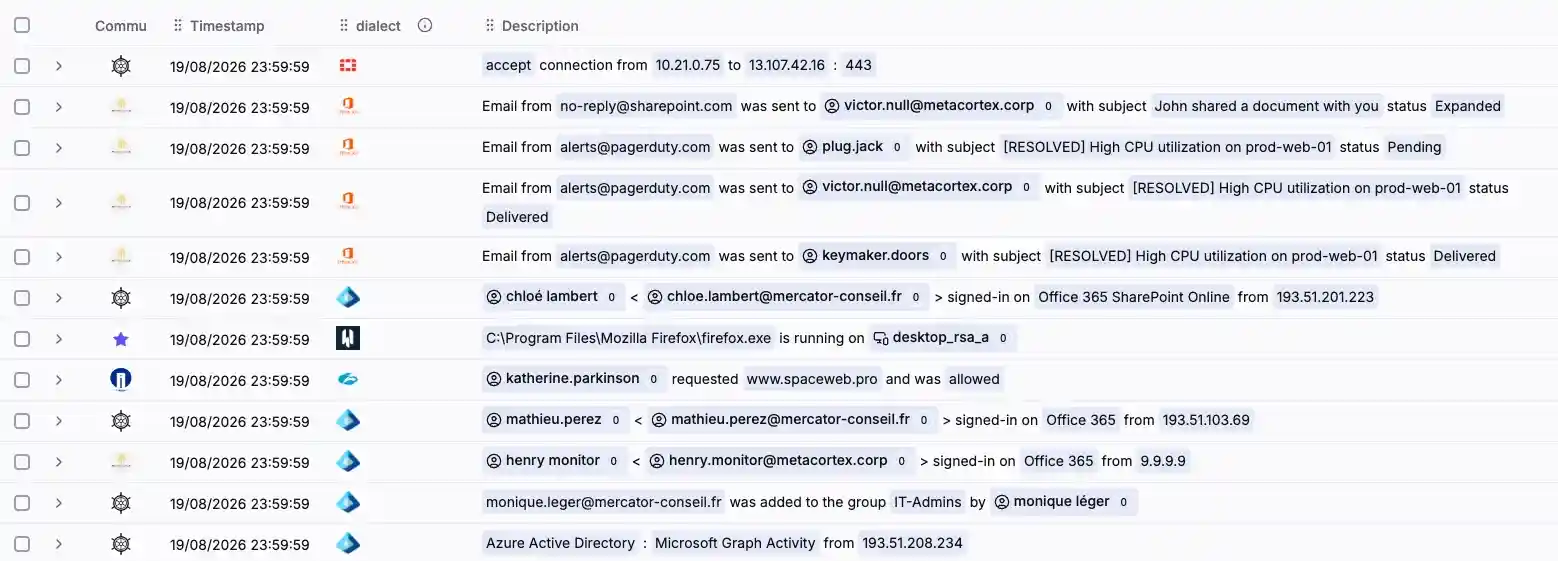
Sekoia’s AI agents work on top of the data lake, with access to the events and telemetry surrounding an alert. That includes logs, network activity, endpoint data, and related events across the environment.
The agent can use the original alert as a starting point, then search for the activity around it. This lets the investigation move beyond the question of whether an alert is suspicious. It can examine what happened before the alert, what happened after it, and whether the activity connects to a wider intrusion.
That broader view is where the value of an agent becomes easier to measure.
Can you see what happened after the alert?
A detection marks a point in time. An incident rarely ends there.
Once an account is compromised or malware reaches an endpoint, other events may follow. New sign-ins, privilege changes, lateral movement, command execution, data access, and persistence attempts can all expand the scope of the incident.
A useful AI investigation should help analysts understand that sequence.
The agent’s timeline should show the steps it took and the evidence it found. For example, it may identify multiple successful sign-ins from one IP address, blocked virtual private network attempts, or the absence of suspicious processes on an endpoint.
That timeline gives analysts a way to review the investigation instead of accepting a final answer without context. It also helps them understand the incident’s blast radius.
The question is no longer only whether the original alert was malicious. The question becomes how far the activity spread and what the targeted organization needs to do next.
Production readiness means visible reasoning
AI agents can reduce the time analysts spend sorting through alerts. They can connect events that are difficult to review manually and help teams focus on the incidents that matter.
Those benefits depend on how the agent is built.
Before deploying an AI agent in a production SOC, ask:
- Where do the models run, and does security data leave the platform?
- Can the agent show the evidence behind its verdict?
- Can the SOC tune its behavior with runbooks and local knowledge?
- Does it have access to the underlying logs and events, or only a summarized alert?
- Can it trace activity before and after the initial detection?
A production SOC needs more than an automated verdict. It needs an investigation that an analyst can review, improve, and defend.
That’s the standard AI agents should meet before they take on a larger role in security operations.