

Best SOC platforms: What should you compare?
A security operations center brings together people, processes and technology to monitor, detect, investigate and respond to cyber threats.
The tools inside a SOC can include a security information and event management platform, endpoint protection, security orchestration, threat intelligence, vulnerability scanners, identity tools and cloud security services.
That creates a practical challenge. The more tools a SOC team has to connect, the more important the platform layer becomes.
The best SOC platforms help security teams bring these signals together. They give analysts a clearer view of what is happening across the environment, then support the work that follows: threat hunting, incident response, automated response and reporting.
There is no universal winner. A large enterprise with an established Splunk environment may have different priorities from an MSSP building a multi-tenant service. A Microsoft-first organization may look for deep ecosystem alignment. A regulated organization may put deployment control and data sovereignty first.
The right question is: Which SOC platform will help your team make better security decisions with the data, tools and people you already have?
What is a SOC platform?
A SOC platform is a technology platform designed to support the main activities of security operations.
That usually includes:
- Collecting and storing security data.
- Detecting suspicious or malicious activity.
- Correlating events across different sources.
- Investigating alerts and incidents.
- Enriching findings with threat intelligence.
- Automating repeatable response actions.
- Supporting threat hunting and reporting.
- Helping security analysts understand what happened.
A traditional SIEM mainly focuses on collecting logs, searching data and creating detections. A SOAR platform focuses on automating response workflows. A threat intelligence platform provides information about attackers, infrastructure and techniques.
A wider SOC platform brings more of these capabilities together.
That does not mean every organization needs to replace every security tool. A SOC platform should also work with the endpoint, network, identity and cloud tools already in place.
What makes the best SOC platforms?
1. Clear visibility across the environment
Security teams need to see more than isolated alerts. They need context from endpoints, networks, identities, cloud workloads, applications and external threat intelligence.
A useful platform should help analysts understand how separate events relate to one another. This can make it easier to identify hidden threats, compromised credentials and attacker activity that crosses several parts of the environment.
2. Threat intelligence integration
Threat intelligence is most useful when it reaches the analyst at the right moment.
Standalone threat intelligence platforms can provide broad global collection, strategic intelligence and detailed information about threat actors. These are valuable capabilities, particularly for dedicated intelligence teams and organizations with complex intelligence requirements.
The operational question is how often that intelligence is used during an investigation.
Sekoia’s positioning is based on bringing Sekoia Intelligence into the same platform as detection, investigation and response. That means intelligence can inform an investigation as it happens, rather than sitting in a separate portal waiting for someone to consult it.
3. Investigation support
A detection creates a question. An investigation should help answer it.
The best SOC tools provide the evidence, context and workflow needed to move from an alert to a reasoned verdict. This includes timelines, related events, asset context, identity information, vulnerability data and attacker knowledge.
For SOC analysts, this is often more valuable than another dashboard. The quality of the investigation determines how confidently the team can act.
4. Responsible automation
Automation is useful when it removes repetitive tasks and gives analysts more time for complex decisions.
Examples include:
- Enriching alerts automatically.
- Grouping related events.
- Opening cases.
- Applying risk scores.
- Running predefined response actions.
- Searching for indicators across historical data.
- Assigning incidents to the right team.
- Producing investigation summaries.
Automation should remain understandable. Security professionals need to know what happened, why the platform reached a conclusion and what action it recommends.
5. Deployment that matches your requirements
Cloud deployment can be a good fit for organizations that want fast access to new capabilities. It is not the only model.
Some organizations need on-premises deployment, air-gapped environments or strict control over where security data is stored. This is especially relevant in defense, healthcare, public sector and other regulated environments.
Deployment flexibility should be part of the SOC platform evaluation from the beginning.
6. Integration support
A SOC platform should connect to the tools that generate security data and the tools that take action.
Look for integration support across:
- Endpoint protection.
- Firewalls and network security.
- Identity and access management.
- Cloud services.
- Vulnerability management.
- Email security.
- Ticketing systems.
- Threat intelligence feeds.
- Collaboration tools.
- Response and containment systems.
The goal is not to collect everything for its own sake, but to help analysts investigate the signals that matter.
Best SOC platforms by use case
The best choice depends on whether your priority is a full operating platform, mature event management, an AI investigation layer, security consolidation or automation across existing tools.
Sekoia: Best for autonomous defensive intelligence
Sekoia is built for security teams that want detection, investigation, response and threat intelligence to work together.
The Sekoia autonomous SOC platform brings SIEM, SOAR and native CTI into one platform. Its positioning is focused on helping analysts move from signal to understanding, then from understanding to action.
The autonomous defensive intelligence platform includes:
- Sekoia Reveal, for asset, identity, exposure, vulnerability and behavioral context.
- Sekoia Intelligence, for attacker knowledge, indicators, tactics and detection insight.
- Sekoia Defend, for detection, triage, investigation, case management and response.
- Sekoia Elevate, for AI agents that investigate, correlate, explain and recommend action.
This structure helps security teams connect the different parts of a SOC workflow. A cloud alert can be viewed alongside endpoint activity. A suspicious identity event can be enriched with threat intelligence. A detection can become a case with evidence, context and response actions attached.
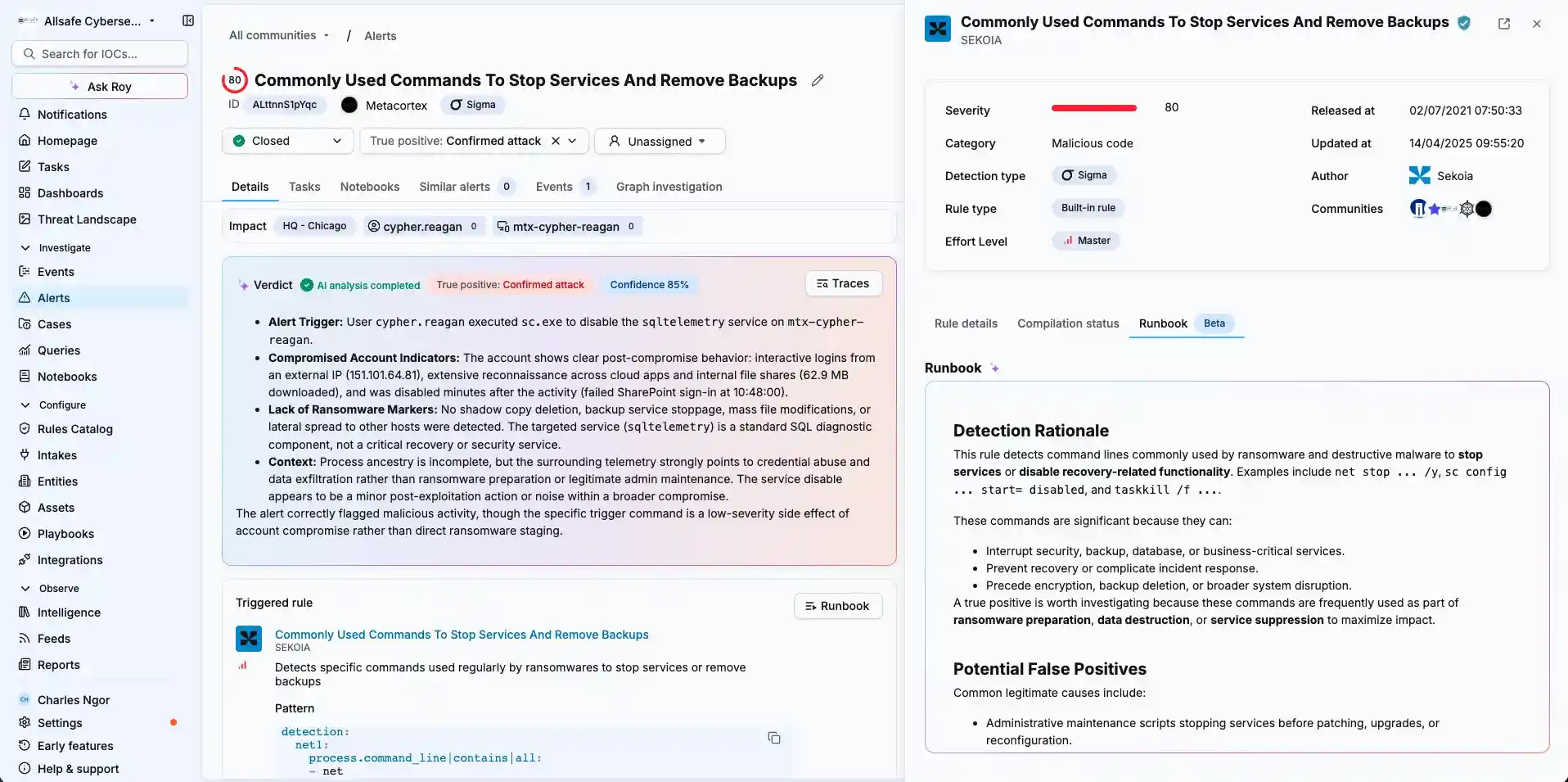
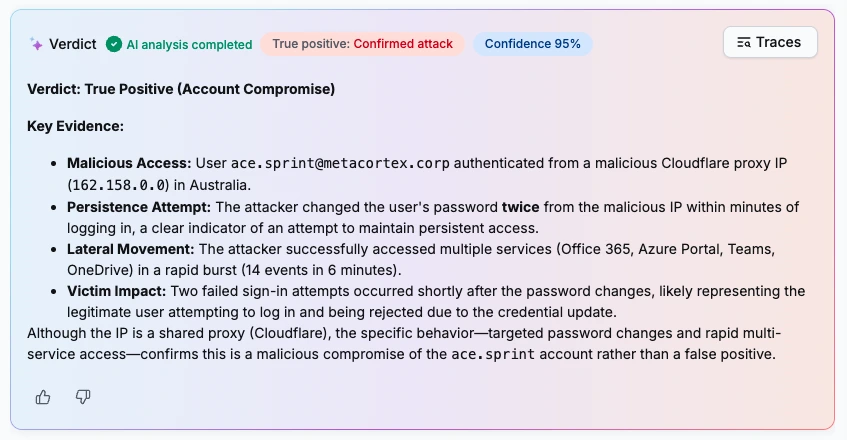
Sekoia Elevate adds AI agents to this workflow. The agents investigate alerts, gather evidence, use Sekoia Intelligence and provide a verdict with findings and reasoning. Analysts remain able to review the evidence, inspect the investigation and make the final decision.
Sekoia is a strong fit for organizations that need:
- One platform for detection, investigation and response.
- Native threat intelligence integration.
- AI-assisted triage and investigation.
- Multi-tenant operations for MSSPs.
- Flexible deployment and data control.
- A platform that works across cloud, on-premises and hybrid environments.
The platform is also designed for partner-led security operations. Sekoia does not sell MDR directly. MSSPs can build their own services on top of the platform while keeping their customer relationship and service model.
Threat intelligence platforms: Standalone or integrated?
Threat intelligence platforms remain important SOC tools, particularly for teams with dedicated intelligence functions.
Standalone platforms such as Recorded Future, Mandiant, Flashpoint, Intel 471 and Google Threat Intelligence are relevant when the primary requirement is broad intelligence collection, strategic reporting or detailed research into threat actors and campaigns.
These platforms can be a strong fit for:
- Threat intelligence teams.
- Security research functions.
- Organizations with global intelligence requirements.
- Strategic risk and executive reporting.
- Teams that need detailed information about attackers and infrastructure.
A SOC team may have a different requirement. Analysts often need intelligence during an investigation, when they are deciding whether an alert represents a genuine threat.
This is where an integrated approach can help. Sekoia Intelligence is built into the Sekoia SOC platform, so threat intelligence can be used during detection and investigation. The aim is to make intelligence part of the workflow rather than another destination for analysts to visit.
Neither model is universally better. A dedicated intelligence team may need a standalone portal with broad collection. A SOC team may value intelligence that is already connected to the alert, the evidence and the response workflow.
Splunk Enterprise Security: Best for mature SIEM operations
Splunk Enterprise Security is a strong choice for organizations that need mature event management, search, investigation and compliance reporting.
Splunk is widely used as a central security data platform. Its strengths include powerful search, a broad application ecosystem, a large user community and strong support for complex data environments.
Splunk Enterprise Security may suit teams that:
- Already have strong Splunk expertise.
- Need deep security search capabilities.
- Have invested in Splunk dashboards and workflows.
- Need established compliance reporting.
- Want to investigate security data across a complex environment.
Splunk is often a natural choice for organizations that have built their security operations around a mature SIEM.
The comparison with Sekoia is less about whether one platform can collect or search security data. Both can support security operations. The more useful question is how each platform helps analysts move from detection to verdict.
Sekoia brings native threat intelligence, response automation and AI-assisted investigation into the same platform. Splunk may be the stronger fit for a team that prioritizes its existing search environment and established SIEM expertise.
Palo Alto Networks: Best for enterprise security consolidation
Palo Alto Networks is a strong option for large enterprises that want to consolidate several security capabilities around an established ecosystem.
Cortex XSIAM is relevant to organizations looking to connect security operations, endpoint protection, response automation and wider enterprise security capabilities. It is especially natural for customers that already use Palo Alto Networks products.
Palo Alto Networks may suit organizations that:
- Want broad coverage from one major security vendor.
- Already rely on Palo Alto Networks infrastructure.
- Prioritize enterprise consolidation.
- Have the skills to manage a broad security platform.
- Value an established ecosystem for network and security operations.
Sekoia offers a different model. It is designed as an independent SOC platform with native threat intelligence, flexible deployment and a partner-first approach.
For regulated organizations, deployment control can be a central part of the decision. For MSSPs, multi-tenancy and channel alignment can be equally important. Both platforms can be relevant, but they serve different operating priorities.
Google Security Operations: Best for Google Cloud-aligned teams
Google Security Operations is a natural platform to consider for organizations that already operate heavily within the Google Cloud environment.
Its strengths include scale, cloud alignment and integration with Google services. It can be a strong fit for teams that want their security operations to sit close to their wider cloud and data strategy.
Google Security Operations may suit organizations that:
- Use Google Cloud extensively.
- Want security data and operations aligned with that environment.
- Have teams experienced with Google technologies.
- Need to manage large and distributed data environments.
- Prefer a hyperscaler-led security strategy.
Sekoia is designed around a different set of priorities, including European hosting, sovereignty, multi-tenant operations and deployment flexibility. This can be particularly relevant for organizations with strict data-control requirements or MSSPs supporting regulated customers.
Top AI SOC platforms
The AI SOC category includes several different types of product.
Some vendors provide an AI analyst layer on top of an existing SIEM or endpoint platform. Others are building broader automation platforms with agentic AI capabilities.
The most useful comparison is not who uses the most impressive language. It is what the AI can actually see, how it investigates, where it runs and how an analyst reviews its work.
Sekoia Elevate: Best for investigation inside the SOC platform
Sekoia Elevate is designed to help agents investigate alerts using the evidence, telemetry and intelligence available inside the Sekoia platform.
That means the AI is connected to the platform’s detection and investigation workflow. It is not limited to a short alert payload or a single event. The agents can correlate information, use native Sekoia Intelligence, explain their reasoning and recommend action.
For SOC teams, the important distinction is control. The goal is not to remove analysts from the process. It is to help them spend less time on repetitive triage and more time on genuine threats.
Torq: Best for automation across existing tools
Torq is a strong option for teams looking to automate workflows across a heterogeneous security stack.
Its strengths include workflow automation, agentic triage, case management and orchestration. It is especially relevant when an organization wants to keep its existing SIEM and security tools while adding automation across them.
Torq may suit teams that:
- Have many separate security tools.
- Want to automate repetitive tasks.
- Need orchestration across different vendors.
- Prefer to add an automation layer to their current environment.
- Have strong workflow and integration requirements.
The key question is whether the SOC team wants an AI layer over existing tools or a platform that also owns the evidence, detection and threat intelligence workflow.
Qevlar AI: Best for AI-assisted investigation over existing tools
Qevlar AI is a relevant option for teams looking for AI-assisted investigation without changing their current SIEM and endpoint architecture.
Its positioning emphasizes autonomous investigation, a deterministic graph approach and a focus on making AI reasoning more understandable. The company also has a strong French and MSSP-oriented presence.
Qevlar AI may suit organizations that:
- Want to keep their existing security stack.
- Need support with investigation workload.
- Want an AI layer that focuses on reasoning and evidence.
- Value a French and European security ecosystem.
- Prefer an MSSP-led route to adoption.
Sekoia approaches the problem from inside the platform. Sekoia Elevate investigates evidence held within the Sekoia platform, where detection, telemetry, threat intelligence and response workflows already connect.
Both approaches can make sense. An add-on investigation layer may be a good fit for a team that wants to preserve its existing stack. An integrated platform may be a better fit for a team looking to connect more of the SOC workflow in one place.
Machine learning and behavioral analytics
Machine learning can help security platforms identify patterns that predefined rules may miss.
Behavioral analysis can help teams understand what is normal for a user, device, application or workload. A change in that behavior may indicate compromised credentials, insider activity or a developing attack.
These capabilities can be valuable in cloud environments, where the volume and variety of activity can make manual review difficult.
The quality of the surrounding context matters, though. A behavioral signal is more useful when the analyst can view it alongside:
- Identity information.
- Endpoint activity.
- Vulnerability data.
- Historical events.
- Threat intelligence.
- Asset importance.
- Previous analyst feedback.
- Related cloud alerts.
Machine learning should help the team investigate better. It should not create a new stream of opaque risk scores that analysts cannot explain.
False positives and alert fatigue
False positives are alerts that appear suspicious but do not represent a genuine threat.
They are part of everyday SOC work. The problem grows when alerts arrive faster than analysts can review them. Over time, alert fatigue can make it harder for teams to focus on malicious activity.
The best SOC tools help reduce this burden in several ways:
- Correlating related alerts into a single incident.
- Adding threat intelligence automatically.
- Enriching events with asset and identity context.
- Prioritizing alerts based on risk.
- Closing clearly benign activity with an explanation.
- Giving analysts feedback loops to improve future triage.
- Automating repeatable response actions.
The broader principle is more important than any single figure. Automation should help analysts spend more time on the threats that deserve their attention.
Autonomous investigation and natural language
Natural language interfaces can make security data easier to explore.
An analyst may want to ask:
- What happened to this account before the alert?
- Which endpoints contacted this domain?
- Have we seen this indicator elsewhere?
- What changed in this cloud workload?
- Which users accessed the affected asset?
- What evidence supports this verdict?
Natural language can make those questions easier to ask, particularly for analysts who are still building confidence with complex query languages.
The interface is only one part of the experience. A useful platform should also show the evidence behind the answer and allow analysts to verify the result.
Autonomous investigation should be treated in the same way. The more responsibility an AI agent takes on, the more important evidence, provenance and analyst control become.
Sekoia Self-Hosted: SOC operations with data control
Sekoia Self-Hosted is a deployment mode for organizations that need to run the Sekoia SOC platform on their own infrastructure.
This can be relevant for organizations with strict sovereignty, compliance or data-control requirements. The current product source describes deployment on customer infrastructure, including disconnected or air-gapped environments, with Sekoia Intelligence and the platform’s security operations capabilities available in that model.
Approved sovereignty messaging also describes Sekoia as deployable according to organizational requirements, including SaaS, on-premises, air gap and SecNumCloud environments.
Sekoia Self-Hosted may be relevant for:
- Defense organizations.
- Public sector environments.
- Healthcare organizations.
- Critical infrastructure.
- Regulated enterprises.
- Teams with strict data residency requirements.
- Organizations that cannot rely on public cloud deployment.
For these teams, the deployment model is part of the security decision. A platform may have strong detection and response features, but still be unsuitable if it cannot operate within the organization’s data-control requirements.
Sekoia Digital Risk
SOC teams need visibility into the signals arriving inside their environment. They also need to understand the wider digital risk surrounding the organization.
Sekoia Digital Risk belongs in that wider conversation. It can be considered alongside SOC operations when security teams are building a broader view of external exposure, digital assets and the signals that may affect the organization before an incident reaches the alert queue.
This creates a useful link between external risk and internal security operations:
- Digital risk helps teams understand the environment around the organization.
- Threat intelligence adds knowledge about attackers and their techniques.
- SOC operations investigate signals from the organization’s systems.
- Response capabilities help the team act when a threat becomes actionable.
Product validation note: The current Marketing OS copy I can see does not contain a dedicated Sekoia Digital Risk source file. The description above is intentionally high level and should be checked with product marketing before publication.
How to choose the best SOC platform
Start with your operating model
Are you running an internal SOC, working with an MSSP or building a managed service for customers?
This will affect the importance of multi-tenancy, partner support, deployment control, pricing structure and investigation workflows.
Map the tools you already use
List the tools that produce security data and the tools that support response.
Then ask whether each platform can connect to those tools, enrich their data and make it useful during an investigation.
Test real alert workflows
A product demo is useful, but a real evaluation should use your own alerts and security data where possible.
Ask analysts to investigate the same event in each shortlisted platform. Compare how easily they can:
- Understand the alert.
- Find related activity.
- Use threat intelligence.
- Review evidence.
- Create a case.
- Take response action.
- Explain the final decision.
Review the AI carefully
Ask what the AI sees and where it runs.
Does it work from raw telemetry, or only from alerts produced by another tool? Does it use native threat intelligence? Can analysts inspect the evidence? Does it support feedback? Can it explain its recommendations?
These questions are especially important in regulated environments and during incident reviews.
Consider deployment and sovereignty
Cloud environments can simplify access and updates. Self-hosted deployment can provide greater control over data and infrastructure.
The best SOC platform is one that can meet your organization’s operational and regulatory requirements without creating a separate security model for the platform itself.
The best SOC platform is the one your team can use well
The best SOC platforms help teams move from alert volume to useful decisions.
Splunk Enterprise Security is a strong choice for mature SIEM and security analytics. Palo Alto Networks suits organizations looking for broad enterprise consolidation. Google Security Operations is relevant for Google Cloud-aligned teams. Torq brings strong automation across heterogeneous tools. Qevlar AI supports AI-assisted investigation over existing security environments.
Sekoia brings detection, investigation, response and native threat intelligence together in one autonomous SOC platform. Sekoia Elevate adds AI agents that investigate, correlate, explain and recommend action, while analysts remain in control. Sekoia Self-Hosted gives organizations with strict data-control requirements a deployment path designed around their own infrastructure.
The right decision starts with your security team, not the vendor category.
Understand the work your analysts need to do. Map the data they need to see. Test how each platform handles a real investigation. Then choose the platform that helps your team act from clarity.