

Introduction
In recent years, the Indo-Pacific has increasingly been recognized as a central arena of strategic and economic competition. Within this region, China and India stand out as principal competitors across technology and innovation, economics, and geopolitics.
The China-India bilateral relationship is paradoxical, as the states rival over unresolved territorial disputes and compete militarily along their shared frontier, yet remain closely tied through economic interdependence. Furthermore, bilateral trade reached $155.6 billion in 2025, and the countries share multilateral frameworks including BRICS and the Shanghai Cooperation Organization (SCO). This interdependence encourages the compartmentalization of bilateral ties, allowing trade and institutional cooperation to continue despite periodic military flare-ups.
The two nuclear powers share a border of 3,488km (2,100 miles), and control two of the world's largest standing armies. Within this context, neither state has an interest in a return to direct military confrontation similar to the Sino-Indian War of 1962 and the Nathu La and Cho La clashes of 1967, which would be costly for both Beijing and New Delhi. Since the 2010s, the countries have instead favored more discreet, sub-threshold confrontation methods, particularly cyber operations.
The most frequently observed activities are cyber espionage and potential pre-positioning. Pre-positioning refers to the covert establishment of persistent access to target networks, particularly those associated with critical infrastructure, ahead of a crisis or conflict, so that the access can later be used for disruption or intelligence collection if directed. Suspected pre-positioning actions were most prominently observed during the Galwan valley military clash in 2020, after which the India-China relationship remained relatively strained until 2024. After tensions peaked and gradual disengagement began at friction points, pre-positioning activity was less frequently observed.
On the other hand, cyber espionage refers to the collection of strategic information by cyber means to support intelligence objectives. These campaigns have been relatively constant since the 2010s, likely to preserve plausible deniability while enabling the collection of political, military, and economic intelligence.
This geopolitical and economic rivalry has notably translated into cyberspace. Thus, this report aims to examine geopolitical and economic drivers behind the reported China and India-nexus cyber operations and present the key state-sponsored intrusion sets on both sides. This also helps highlight the key sectors that are targeted in the context of this regional rivalry.
Note
The campaigns explored in this paper are based on Sekoia’s threat monitoring and open-source reports. Reported campaigns do not establish the exact number of operations over the last decade. This limitation is compounded by the nature of the threat. While campaigns such as ransomware and DDoS are more immediate and ‘visible’, as often claimed directly by their operators, cyber espionage activities are stealthier and less documented in open source or with a longer delay.
Geopolitical drivers of cyber espionage
This section focuses on the key geopolitical drivers of cyber espionage campaigns between China and India. This rivalry is most visibly centered on border disputes. However, tensions over energy, transboundary rivers and hydropower also form a key part of the equation.
Border disputes
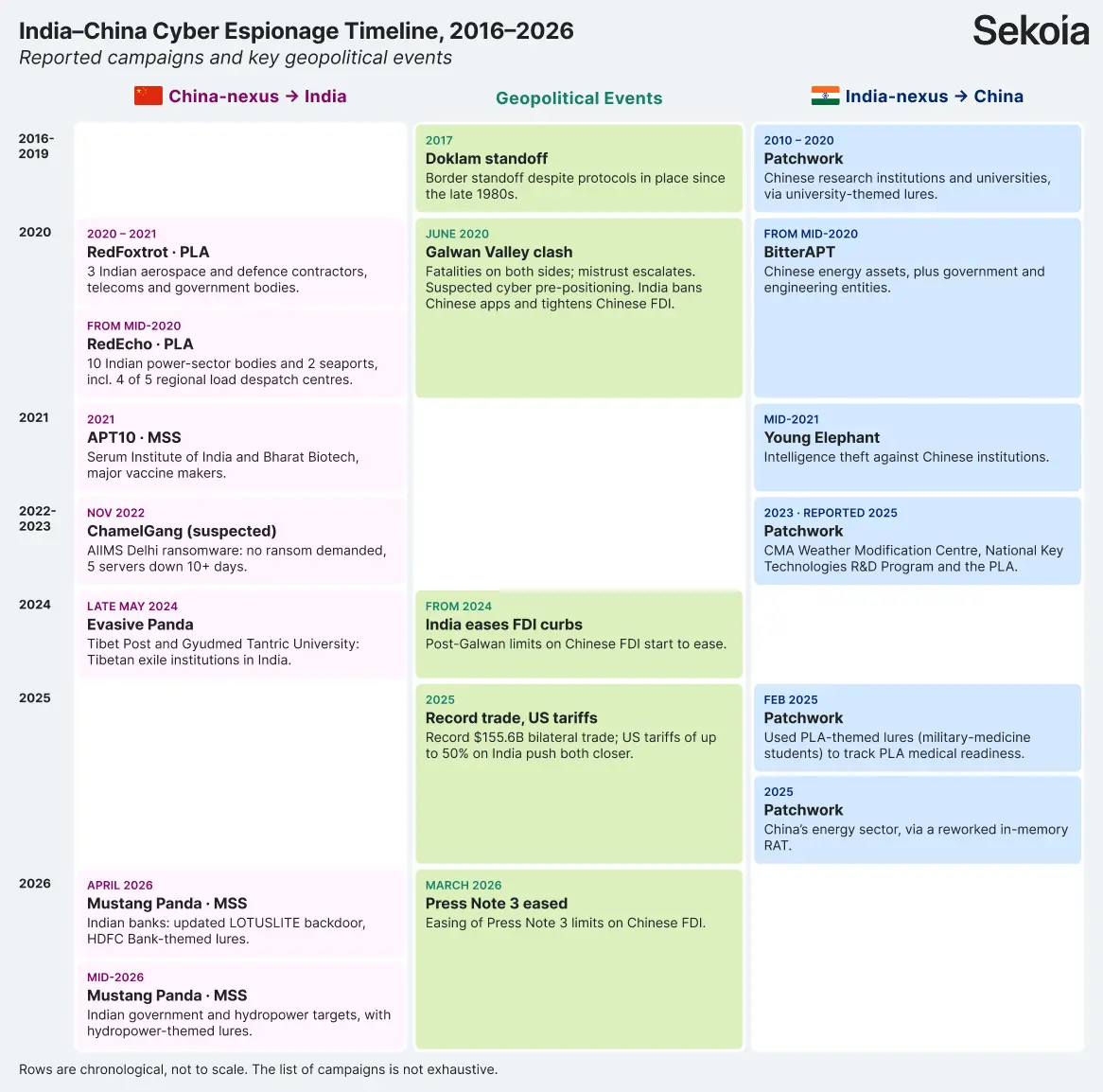
Unresolved border disputes are the most direct source of bilateral friction between Beijing and Delhi. The dispute mainly centers on Aksai Chin, a China-administered high-altitude plateau that India claims as part of Ladakh, and on Arunachal Pradesh, which India administers and China claims. The boundary on these fronts has never been formally agreed upon, and has previously been the focal point of a four-week war in 1962, after which China retained Aksai Chin and the de facto boundary, the Line of Actual Control (LAC), emerged. Border protocols agreed since the late 1980s largely prevented armed confrontation, though standoffs have occurred, including at Nathu La in 1967 and Doklam in 2017.
However, the 2020 Galwan Valley clash, which caused fatalities on both sides, marked a clear inflection point. The clash sharply escalated strategic mistrust and has been correlated with offensive cyber campaigns attributed to intrusion sets from both states.
Among China-nexus intrusion sets, RedFoxtrot, linked to the People's Liberation Army (PLA), notably targeted three Indian aerospace and defense contractors as well as telecommunications providers and government organizations between 2020 and 2021, for espionage purposes.
India concomitantly banned a range of Chinese mobile applications, potentially aiming to reduce Beijing's available attack surface on Indian networks while signaling a broader hardening of India's posture. Offensively, suspected India-nexus intrusion sets also targeted Chinese institutions. In November 2021, Antiy reported that a suspected India-origin group, tracked as Young Elephant, had conducted intelligence-theft operations against Chinese institutions in mid-2021. During this period, India-China relations were still tense following the aftermath of the 2020 Galwan valley clash. We assess that this campaign likely supported India’s strategic objectives in this context.
The Tibet factor
India's hosting of the Tibetan government-in-exile, unrecognized by Beijing, is a structural source of friction likely treated by China as a distinct intelligence-collection priority. Following the 1959 Tibetan uprising, the 14th Dalai Lama fled Lhasa for India, and a substantial portion of the Tibetan diaspora subsequently settled there.
Although the Indian government maintains an officially cautious diplomatic posture on the Tibet question, the exile community's continued presence and political activity remains a recurring flashpoint. This friction has translated into cyber espionage campaigns that have targeted institutions based in India.
In late May 2024, Recorded Future observed a watering hole campaign compromising the websites of Tibet Post and Gyudmed Tantric University, both based in India. Insikt Group tracks this activity as TAG-112, which overlaps with the China-nexus intrusion set Evasive Panda through shared use of the legitimate software component C64 Forever to load a malicious DLL and similar targeting of the Tibetan community, compromising similar websites, such as tibetpost[.]net.
The presence of Tibetan exile institutions in regions of India, like Dharamshala in Himachal Pradesh in the North of the country, as well as in Bylakuppe and Mundgod in Karnataka in the South, may increase the exposure of Indian-based Tibetan community websites and institutions to China-nexus cyber espionage.
We assess that this targeting is likely to continue in the near term, with medium confidence, particularly as the succession of the 14th Dalai Lama becomes a strategic issue. Beijing views choosing his successor as a strategic priority, whereas the Dalai Lama has stated that he will be reborn outside China, in the “free world,” and has suggested this could be in India.
Energy and hydropower
Beyond defense and government targets, energy infrastructure emerged as a second focus of cyber espionage activity in the context of geopolitical rivalry.
In the period of heightened tensions after Galwan, from mid-2020 onwards, China-nexus threat actors were reported conducting an intelligence-gathering campaign against 10 Indian power sector organizations and two Indian seaports, all owned or controlled by the Indian government. Within the power sector, RedEcho (aka Redfly), attributed to the People’s Liberation Army (PLA), targeted at least four of the country’s five Regional Load Despatch Centres (RLDCs) and two State Load Despatch Centres (SLDCs), which are used to monitor and control electricity generation and distribution. On the Indian side, BitterAPT was observed to have targeted Chinese energy assets in cyber espionage campaigns, indicating that the sector is a priority for Delhi as well.
However, the targeting of the energy sector on the China side has not been limited to periods of heightened border tensions, but rather reflects a long-standing Chinese interest in India’s energy infrastructure. In mid-2026, Mustang Panda conducted espionage campaigns against the Indian government and hydropower-related targets. In particular, the hydropower theme lure used in this campaign aligns with water management and energy security issues over transboundary rivers.
India is concerned over the Brahmaputra river (Yarlung Tsangpo in China), which flows from Tibet into India through Arunachal Pradesh, one of the two areas at the center of the border dispute. China’s construction of the Motuo (Medog) dam, one of the largest installations in the region, on this river threatens downstream water flows and gives Beijing strategic leverage in disputed Arunachal Pradesh.
To counter this and reinforce its border presence, India is accelerating its own dam projects, including the Siang River facility. Consequently, intelligence on India's current and planned hydropower infrastructure holds high strategic value for foreign state-aligned actors and is likely to remain a target for China-nexus cyber espionage operations.
Economic drivers of cyber espionage
Despite persistent border tensions, India and China remain closely entangled economically. Bilateral trade reached a record $155.6 billion in 2025 but remained asymmetric. India’s trade deficit with China grew from $85 billion in 2023-24 to more than $116 billion in 2025, driven by Chinese electronics, machinery, and chemical exports that India cannot readily substitute domestically.
Together with shared BRICS and SCO membership, this interdependence likely gives both states an incentive to monitor the other’s economic decisions. Since 2024, India has also begun easing restrictions on Chinese foreign direct investment (FDI), which had been tightened after the 2020 Galwan clash. We assess that the campaigns described below, targeting research, technology, and finance, are highly consistent with this incentive.
This section examines key economic drivers of cyber espionage between India and China: the competition in key sectors, notably pharmaceuticals and scientific research, and the monitoring of financial flows, particularly Chinese investment in India.
Targeting of the research sector
Pharmaceuticals and medical research
Both India and China are seeking a larger role in the global pharmaceutical supply chain. This reciprocal cyber espionage has largely been observed to target research and academia, most prominently pharmaceutical and medical institutions.
China-nexus activity has focused on Indian pharmaceutical and medical entities since at least 2021. APT10 was reported to have conducted a cyber espionage campaign against the Serum Institute of India (SII) in 2021, the world’s largest vaccine manufacturer by volume, and Bharat Biotech, both of which supply vaccines internationally. India produced more than 60% of vaccines sold worldwide at the time. In November 2022, the All India Institute of Medical Sciences (AIIMS) in Delhi was also targeted by a ransomware campaign suspected to be linked to ChamelGang, a dual-purpose intrusion set likely based in China. No ransom demand was reported, and five servers were disrupted for more than 10 days, which may indicate that it was not a lucrative campaign but likely an operation aimed at collecting intelligence or creating disruption.
Conversely, this sector also motivated sustained India-nexus operations, which targeted Chinese research institutions. This was most visible between 2010 and 2020, when university-themed lures were a recurring feature of India-nexus cyber espionage campaigns against China, particularly leveraged by the intrusion set Patchwork.
Following the COVID-19 vaccine competition and subsequent vaccine diplomacy, and given China’s rapid growth in research output, the interest of India in Chinese research remains high. Building on a campaign reported by QiAnXin in 2023, Sekoia analysts uncovered India-nexus campaigns targeting China and Pakistan in February 2025. The campaigns leveraged BADNEWS malware, a remote-access trojan attributed to Patchwork. They also used PLA-themed lures, such as lists of graduating military-medicine students, likely to support intelligence gathering on the PLA, potentially focusing on topics such as medical readiness.
Scientific research
Beyond medical research, India-nexus cyber groups have also targeted broader Chinese scientific research. Building on campaigns attributed to Patchwork in 2023, reported as still ongoing by Sekoia in 2025, other lure documents also pointed at the CMA Weather Modification Centre and the National Key Technologies R&D Program. These two research entities notably cover disciplines such as renewable energy, materials science, microelectronics, and marine engineering. This focus on scientific research, like green technologies among others, is likely driven by critical mineral and semiconductor dependencies. As India expands its renewable energy sector, China's dominant supply chain position poses a major strategic constraint, which likely motivates India-sponsored cyber espionage campaigns.
This rivalry reflects a structural asymmetry in this sector. China controls upstream manufacturing, including polysilicon refining, ingot and wafer production, and cell manufacturing equipment, allowing it to dictate global market pricing via long-term state subsidies. Conversely, India focuses primarily on downstream deployment and export expansion toward Africa and the Middle East, remaining reliant on Chinese inputs.
Since Beijing's near-monopoly on rare earth elements directly impacts India's energy transition, it is assessed with moderate confidence that India-nexus threat groups may continue targeting Chinese energy and research sectors to support state strategic planning.
Recent Chinese targeting of the financial sector
More recent Chinese-nexus activity also targeted India's financial sector, a trend corresponding to the period of India's economic reopening to China. US tariffs of up to 50% on Indian goods in 2025, alongside March 2026 amendments easing Press Note 3 restrictions on Chinese FDI, are pushing both economies toward deeper engagement.In April 2026, Mustang Panda deployed an updated version of the LOTUSLITE backdoor against India's banking sector, using lures themed on HDFC Bank, India’s largest private sector bank. This activity may indicate growing interest in India’s financial sector, likely to receive insight into capital flows and compliance data, as investment and information-rights access through legitimate FDI channels expands in parallel.
Key intrusion sets linked to cyber espionage
This section profiles India-nexus and China-nexus intrusion sets relevant to the espionage activity described above. India-nexus attributions below are vendor assessments, and no government attribution was identified in the reporting reviewed.
Institutions behind India’s cyber offensive capabilities
India has likely raised the priority of cyber capabilities within its national security strategy over the past decade, a shift assessed to be driven largely by the perception of a growing threat from China-nexus operations. Regional rivalry with Pakistan is also a major contributor, but China’s capability lead and India’s exposure to Chinese technology and infrastructure likely make it a consequential driver.
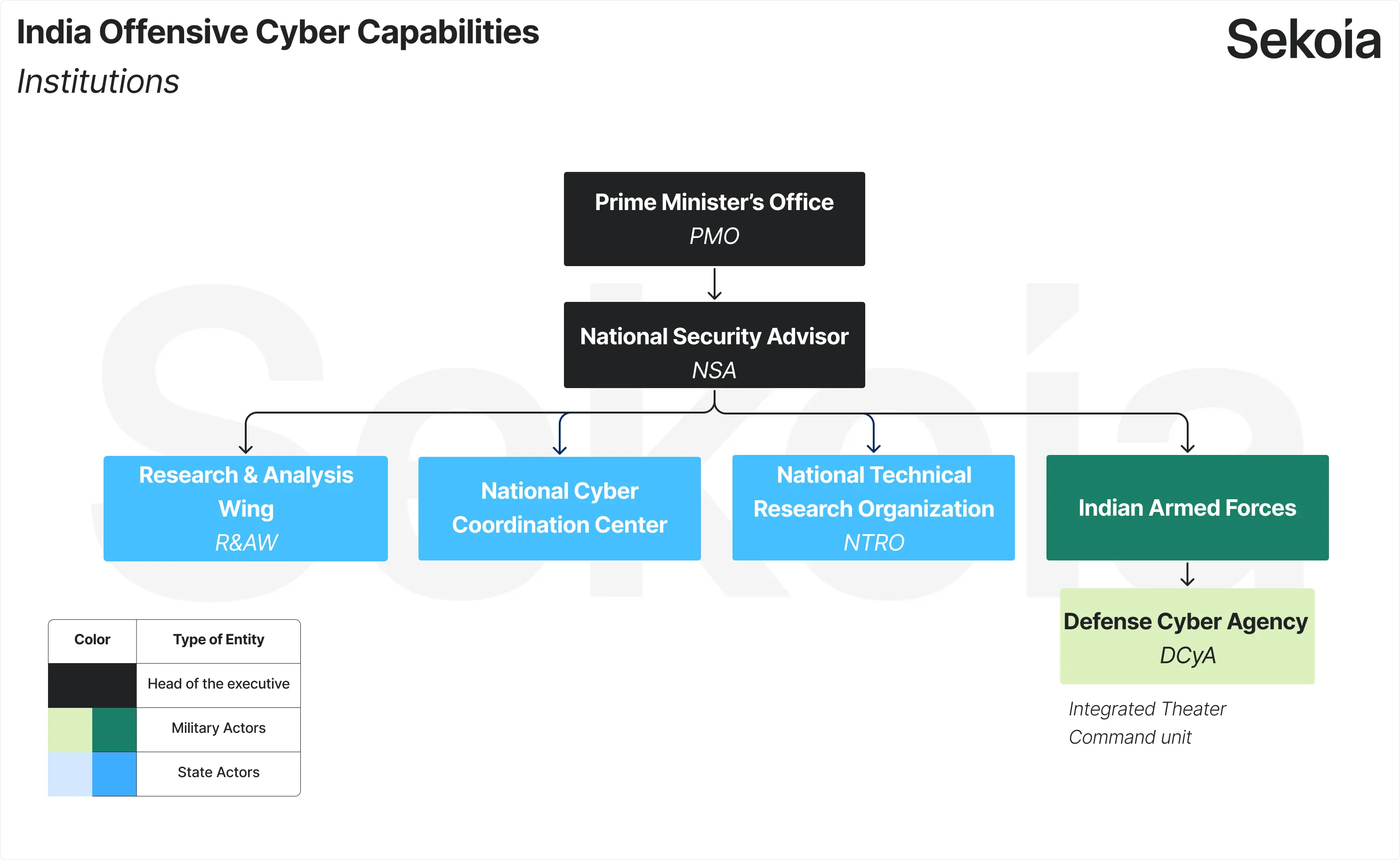
India’s intelligence community contains some cyber functions, notably the National Technical Research Organisation (NTRO) that has technical-intelligence collection mandates, and the Research and Analysis Wing (R&AW), India’s external intelligence agency. It is speculated that these agencies may also conduct cyber espionage operations, although open-source reporting does not confirm their involvement in specific campaigns. Militarily, the Defence Cyber Agency (DCyA) is an integrated tri-services agency of the Indian Armed Forces, and its mandate is reported to include offensive cyber operations.
The Joint Doctrine for Cyberspace Operations released by the Department of Military Affairs of India in 2025 calls for integrating cyberspace into the national security framework to create strategic advantages and project influence across all domains and instruments of national power.
Furthermore, a reported institutional focus on joint operations suggests that tools and tactics may be shared across actors. This complexifies the attribution of cyber offensive operations to one particular agency.
Indian military and intelligence agencies have also been alleged to employ private contractors. Reuters reported that, by 2009, clients of Appin, an Indian security firm, may have included the R&AW, India’s external intelligence service, and the Intelligence Bureau, the domestic intelligence agency. It was also reported that several agencies later terminated their contracts with Appin, after which the firm shifted its focus to private sector clients, operating as a hack-for-hire provider.
India-nexus intrusion sets targeting China
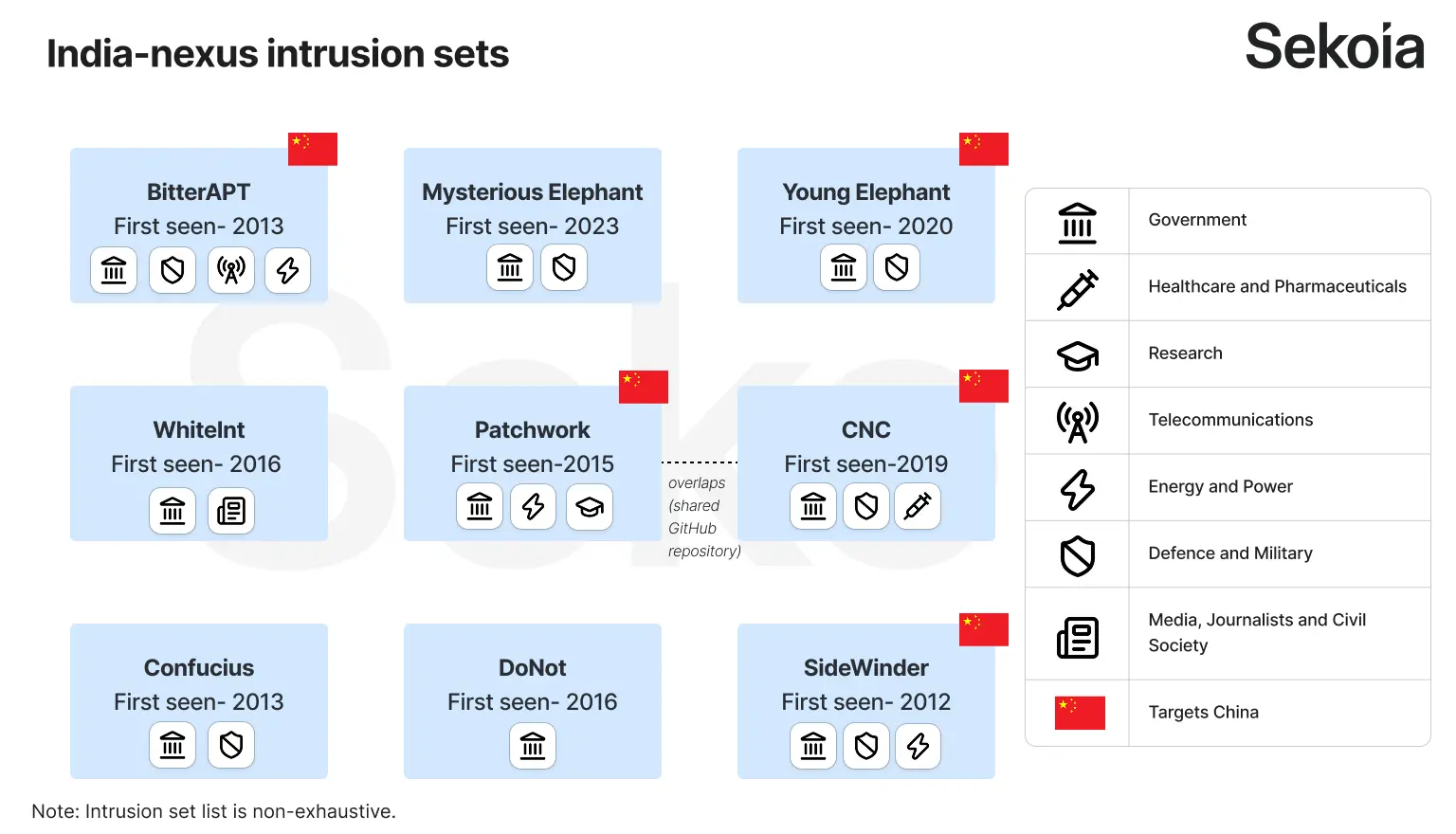
Patchwork (aka APT-C-09, APT-Q-36, White Elephant, Dropping Elephant, Hangover, MONSOON)
It has been active since at least 2015 and associated with cyberespionage activity. Its reported victimology consists primarily of defense, energy, government, diplomatic and think-tank targets. Initially known to target South Asia, South East Asia and China, its targeting has extended to the European Union and the United States.
It uses a range of customized tooling and techniques for intelligence-gathering, and has been reported to target diplomats and economists with ties to China since 2015. In January 2021, Cyble observed a Patchwork espionage campaign using a lure themed around joint Chinese-Pakistani fighter jet war games, suggesting likely targeting of China’s defense and military community. Most recently, Rapid7 notably recorded a mid-2025 campaign targeting China's energy sector with a reworked in-memory RAT.
Chinese vendors assess the intrusion set CNC (aka APT-C-48), first seen in 2019, overlapping Patchwork given shared GitHub infrastructure and code lineage in their early operations. This led QiAnXin to track CNC as Patchwork until around mid-2024. However, more recent reporting treats CNC as a distinct but related cluster. 360, QiAnXin, Sangfor and Antiy report CNC activity against Chinese government, military, education and research organizations, particularly aerospace and marine-science institutions.
BitterAPT (aka T-APT-17, Orange Yali, Hazy Tiger, TA397)
It has been active since at least 2013 and is primarily associated with cyber espionage. Its victimology includes government, energy and engineering entities across China, South Asia and the Middle East. Reported targeting has also included Bangladesh and energy-related organisations in the Asia-Pacific region. In a campaign reported by Proofpoint in 2024, it targeted a Turkish defense sector organization with a lure themed around public infrastructure projects in Madagascar, illustrating its reach beyond South Asia and China. Some CTI vendors such as ProofPoint and Threatray assess its activity as aligned with Indian interests, yet, no attribution from government sources is available.
Tooling overlap has been reported across several of these clusters. Proofpoint and ThreatRay identified overlap between BitterAPT and other India-nexus actors, including Mysterious Elephant and Confucius, through the use of ORPCBackdoor. This suggests that these groups may operate within a broader tool-sharing ecosystem, likely relying on private actors. It is unclear whether they access a central development resource, or “quartermaster”.
Institutions behind China’s cyber offensive capabilities
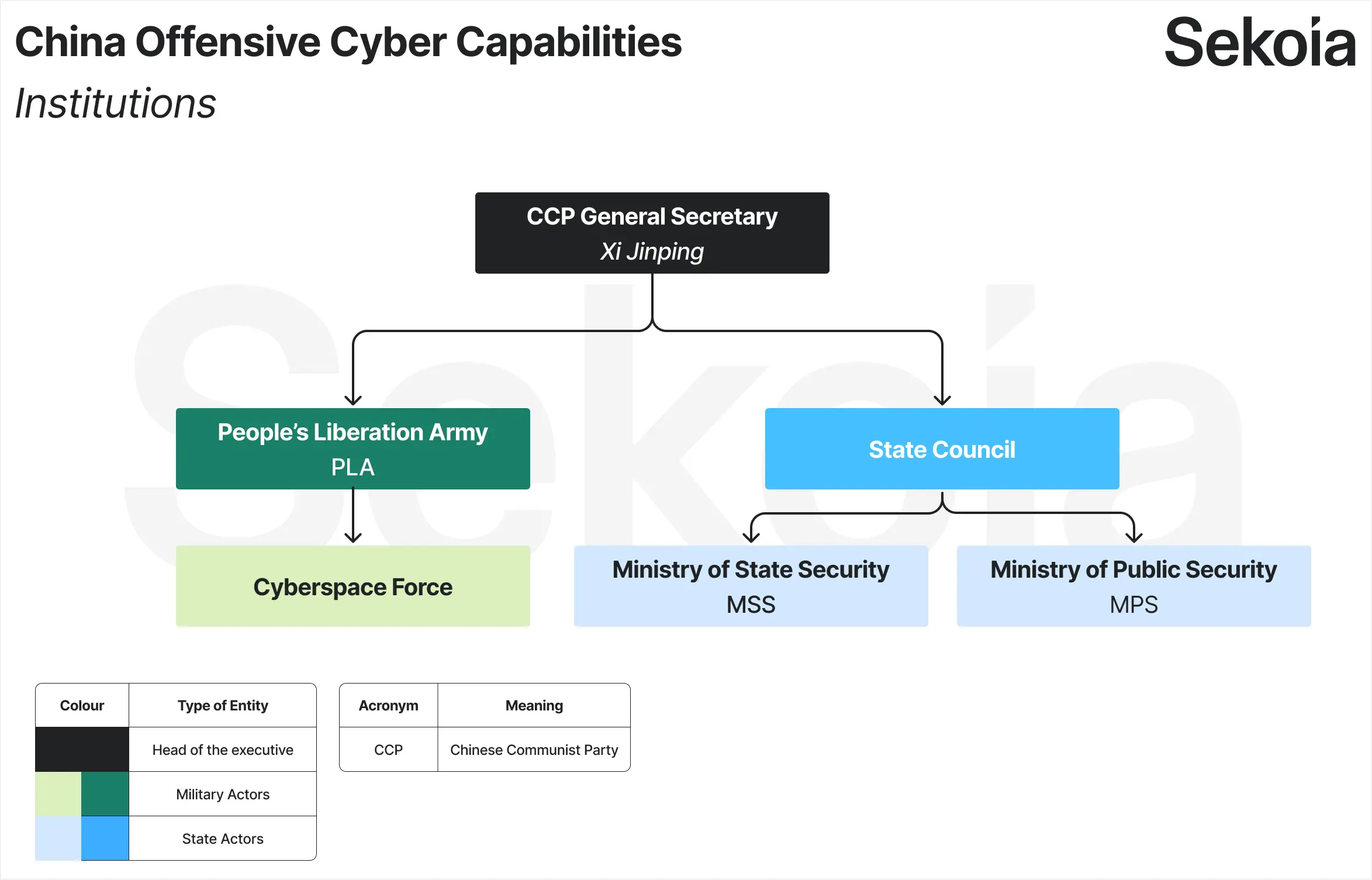
As detailed in a previous Sekoia report, China's state-sponsored cyber operations are conducted primarily through the People's Liberation Army (PLA), the Ministry of State Security (MSS) and the Ministry of Public Security (MPS), on behalf of the Chinese Communist Party.
China's cyber offensive ecosystem likely combines state agencies, provincial and municipal authorities, relying on private contractors, front companies, and universities. Of the intrusion sets documented as targeting Indian entities, the strongest links are to clusters associated with the PLA and the MSS, suggesting that both bodies have an operational interest to target India.
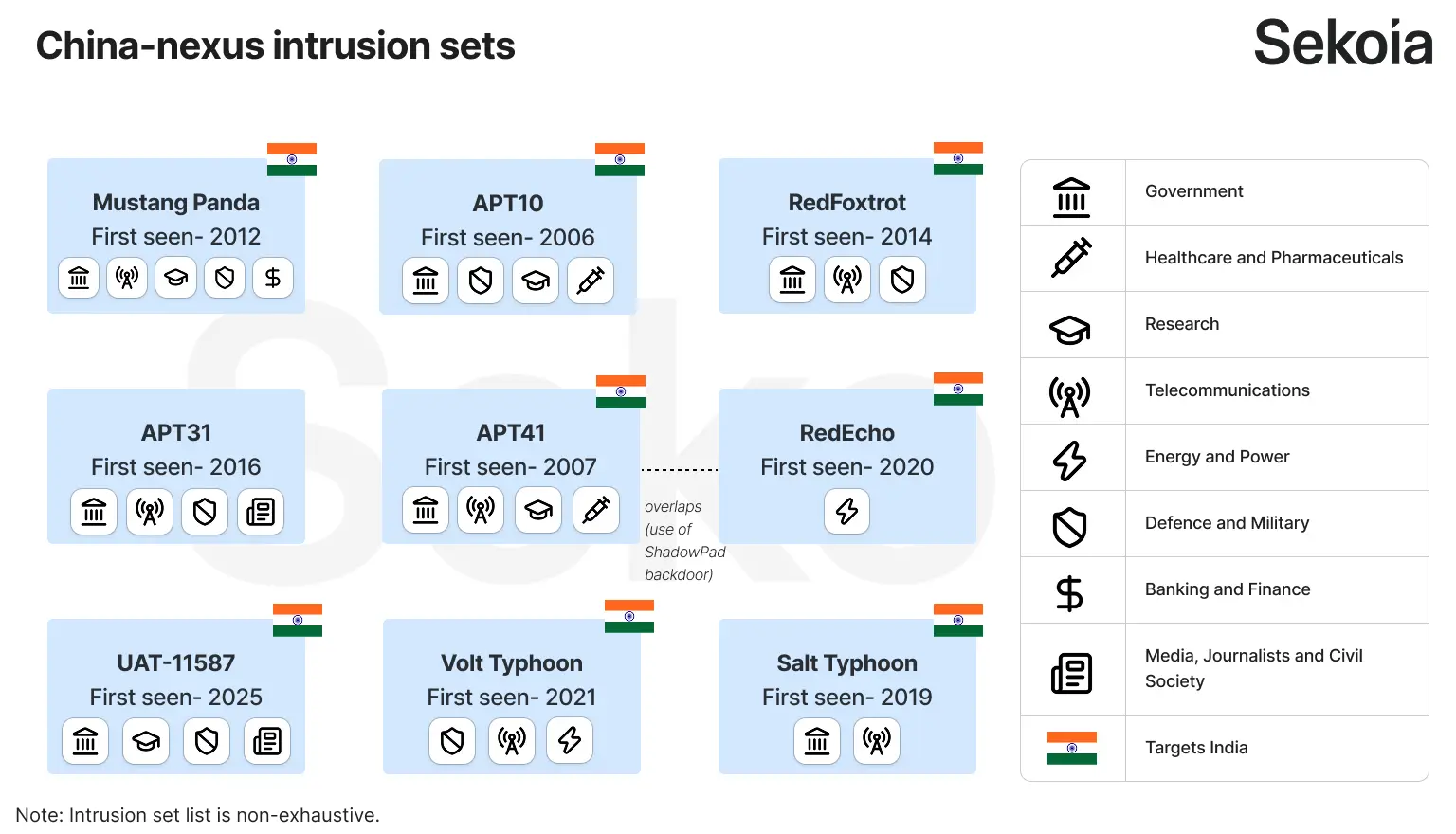
China-nexus intrusion sets targeting India
RedFoxtrot (aka Nomad Panda, Moshen Dragon)
It has been active since at least 2014 and is associated with PLA Unit 69010. The unit was assessed as a Technical Reconnaissance Bureau within the PLA and was previously associated with the Lanzhou Military Region. It predominantly targets government, defense, and telecommunications sectors across Central Asia, India, and Pakistan. Reported Indian victims include aerospace and defence contractors, telecommunications providers and government agencies, indicating a focus on regional security and military intelligence. Between 2020 and 2021, in the aftermath of the Galwan Valley clash, it notably targeted three Indian aerospace and defense contractors, as well as unnamed telecommunications providers and government organizations, for espionage purposes.
Mustang Panda (aka TA416, Stately Taurus, Earth Preta, ITG27)
It has been active since at least 2012, with public reporting frequently associating it with the MSS. Mustang Panda targets a broad range of victims worldwide, including government entities (notably in Taiwan, Mongolia, Myanmar, Pakistan, Russia and India), diplomatic NGOs, think-tanks, activists and ethnic minorities. In India, its victimology includes government, hydropower, telecommunications and financial organisations. In April 2026, for instance, it deployed an updated LOTUSLITE backdoor against India’s banking sector, using lures themed on HDFC Bank, India’s largest private sector bank.
RedEcho (aka Redfly)
It has been active since at least mid-2020. It was most notably reported targeting the Indian power sector and critical infrastructure. From mid-2020, it targeted at least four of India’s five Regional Load Despatch Centres and two State Load Despatch Centres, which monitor and control electricity generation and distribution, as part of a wider campaign against 10 Indian power sector organizations and two seaports. RedEcho displays infrastructure and victimology overlaps with Chinese groups APT41 and Tonto Team.
Conclusion
Cyber espionage is likely a standing collection requirement for both Beijing and New Delhi, and its persistence under diplomatic thaw points to a structural rather than reactive driver. Some victimology shifts appear to follow the strategic context, such as immediate activity that was observed after border clashes and that largely concentrated on defense, telecommunications and power infrastructure. However, targeting of research entities and competitive sectors like pharmaceuticals and scientific research, has remained relatively constant.
Beyond this, cyber offensive capabilities of the states are likely asymmetric. Sekoia assesses that China-nexus actors hold a relative advantage, owing to a deeply institutionalized civil-military cyber apparatus and the weaponization of zero-day vulnerabilities, whereas India-nexus activity may rely on a more diffused set of agencies, contractors and shared tooling.
Looking ahead, Sekoia assesses that cyber espionage activity is highly likely to continue and potentially expand over the next several years. For China-nexus actors, targeting is expected to follow investment and capital flows as economic engagement deepens. India-nexus operations will likely continue to target Chinese research, energy and military entities. Hydropower and water management is also likely to remain a priority collection theme for both states. Although economic and diplomatic relations are expected to improve in the short-term, unresolved geopolitical tensions and strategic mistrust are highly likely to linger. These factors will likely sustain intelligence collection requirements, and with them the cyber espionage threat.